Mapped to the ESAT specification
NSAA 2020 Chemistry Part Y
20 questions20 marksUpdated October 2025
Natural Sciences Admissions Assessment 2020 is one of the closest available past papers for the Engineering and Science Admissions Test. Below, all 20 questions are mapped to the ESAT topics they test, each with its answer. Sit it cold under exam timing, then work back through anything you missed using the solutions.
What this paper covers on the ESAT
Every question mapped to the Engineering and Science Admissions Test specification, so you know exactly which areas it tests.
Mathematics 1
- Algebra (1)
Chemistry
- Quantitative chemistry (10)
- Energetics (3)
- Air and water (2)
- Metals (1)
- Oxidation, reduction and redox (1)
Questions and answers are free. Full step-by-step worked solutions unlock with a free account. Start practising.
Question 21
1 markThe table gives standard enthalpy change data measured at 25 °C.
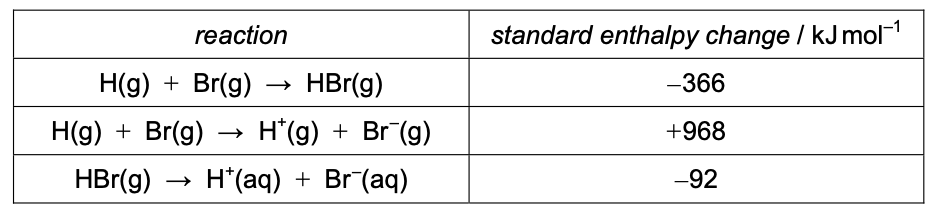
What is the standard enthalpy change for the following reaction at 25 °C?
H⁺(g) + Br⁻(g) → H⁺(aq) + Br⁻(aq)
What is the standard enthalpy change for the following reaction at 25 °C?
H⁺(g) + Br⁻(g) → H⁺(aq) + Br⁻(aq)
- A.
- B.
- C.
- D.
- E.
- F.
- G.
- H.
Answer: G
Question 22
1 markAlpha-linolenic acid is a polyunsaturated straight-chain carboxylic acid.
of the acid reacts exactly with of aqueous bromine.
Alpha-linolenic acid contains 18 carbon atoms per molecule.
Which of the following is a formula for the acid?
of the acid reacts exactly with of aqueous bromine.
Alpha-linolenic acid contains 18 carbon atoms per molecule.
Which of the following is a formula for the acid?
- A.
- B.
- C.
- D.
- E.
- F.
- G.
- H.
Answer: G
Question 23
1 mark of compound X contains of potassium, of hydrogen and of oxygen.
When heated strongly, compound X produces a gas that turns limewater cloudy.
The chemical formula of X is the same as its empirical formula.
Compound X is the only product formed between substance Y and two further substances. One of these is the fourth most abundant gas in clean dry air, and the other changes the colour of anhydrous copper(II) sulfate from white to blue.
Which of the following could be the identity of substance Y?
( values: H = 1; C = 12; O = 16; K = 39)
When heated strongly, compound X produces a gas that turns limewater cloudy.
The chemical formula of X is the same as its empirical formula.
Compound X is the only product formed between substance Y and two further substances. One of these is the fourth most abundant gas in clean dry air, and the other changes the colour of anhydrous copper(II) sulfate from white to blue.
Which of the following could be the identity of substance Y?
( values: H = 1; C = 12; O = 16; K = 39)
- A.K
- B.
- C.
- D.
- E.
Answer: B
Question 24
1 markStrontium (Sr) is a Group 2 metal.
Strontium hydride is an ionic compound made up of strontium and hydrogen only.
When a small mass of strontium hydride is added to of water in an insulated container and stirred, the temperature of the water rises by 25 °C and hydrogen gas is given off.
Assume that:
• the standard enthalpy change of the reaction is of strontium hydride.
• the specific heat capacity of water (and the solution formed) is . Ignore any change in mass of the water due to the reaction.
• all heat is transferred to the water only.
• all measurements are made at atmospheric pressure, with all reactants and products in their standard states.
• one mole of a gas occupies at room temperature and pressure.
What is the maximum volume of hydrogen (measured at room temperature) that could be released?
Strontium hydride is an ionic compound made up of strontium and hydrogen only.
When a small mass of strontium hydride is added to of water in an insulated container and stirred, the temperature of the water rises by 25 °C and hydrogen gas is given off.
Assume that:
• the standard enthalpy change of the reaction is of strontium hydride.
• the specific heat capacity of water (and the solution formed) is . Ignore any change in mass of the water due to the reaction.
• all heat is transferred to the water only.
• all measurements are made at atmospheric pressure, with all reactants and products in their standard states.
• one mole of a gas occupies at room temperature and pressure.
What is the maximum volume of hydrogen (measured at room temperature) that could be released?
- A.
- B.
- C.
- D.
- E.
- F.
Answer: C
Question 25
1 markElement X forms the most soluble hydroxide of the hydroxides of the Group 2 elements in the range Mg to Ba.
of a aqueous solution of an acid Y is exactly neutralised by of a aqueous solution of potassium hydroxide.
of a aqueous solution of Y is titrated with an aqueous solution of the hydroxide of X until the acid is exactly neutralised.
Which statement about one product of the titration could be correct?
of a aqueous solution of an acid Y is exactly neutralised by of a aqueous solution of potassium hydroxide.
of a aqueous solution of Y is titrated with an aqueous solution of the hydroxide of X until the acid is exactly neutralised.
Which statement about one product of the titration could be correct?
- A. of barium chloride is formed.
- B. of barium chloride is formed.
- C. of magnesium chloride is formed.
- D. of magnesium chloride is formed.
- E. of barium sulfate is formed.
- F. of barium sulfate is formed.
- G. of magnesium sulfate is formed.
- H. of magnesium sulfate is formed.
Answer: E
Question 26
1 markIn the presence of a suitable catalyst, of a aqueous solution of reacts exactly with of a aqueous solution of .
The only products of the reaction are another cerium salt, a different water-soluble salt and carbon dioxide.
What is the cerium ion formed by this reaction?
The only products of the reaction are another cerium salt, a different water-soluble salt and carbon dioxide.
What is the cerium ion formed by this reaction?
- A.
- B.
- C.
- D.
- E.
Answer: C
Question 27
1 markConsider all of the structural isomers of and the ways that they could react with hydroxide ions from aqueous sodium hydroxide.
How many different organic products (including all structural and E/Z isomers only) containing four carbons could be made?
How many different organic products (including all structural and E/Z isomers only) containing four carbons could be made?
- A.4
- B.5
- C.6
- D.7
- E.8
- F.9
Answer: E
Question 28
1 markIn which of the following conversions does the stated bond angle decrease?
1. hydrogen-nitrogen-hydrogen bond angle in the conversion from to
2. fluorine-iodine-fluorine bond angle in the conversion from to
3. chlorine-aluminium-chlorine bond angle in the conversion from to
1. hydrogen-nitrogen-hydrogen bond angle in the conversion from to
2. fluorine-iodine-fluorine bond angle in the conversion from to
3. chlorine-aluminium-chlorine bond angle in the conversion from to
- A.none of them
- B.1 only
- C.2 only
- D.3 only
- E.1 and 2 only
- F.1 and 3 only
- G.2 and 3 only
- H.1, 2 and 3
Answer: D
Question 29
1 markEthanol combines with ethanoic acid to form ethyl ethanoate according to the following reaction.
at 25 °C
A mixture of ethanol, ethanoic acid and ethyl ethanoate is allowed to react and reach equilibrium.
The resulting equilibrium mixture is found to contain ethanoic acid at 25 °C and was calculated.
What will happen to the value of when the temperature is increased from 25 °C to 45 °C?
( values: ; ; ; )
at 25 °C
A mixture of ethanol, ethanoic acid and ethyl ethanoate is allowed to react and reach equilibrium.
The resulting equilibrium mixture is found to contain ethanoic acid at 25 °C and was calculated.
What will happen to the value of when the temperature is increased from 25 °C to 45 °C?
( values: ; ; ; )
- A.It increases from an initial value of 0.242
- B.It decreases from an initial value of 0.242
- C.It increases from an initial value of 1.833
- D.It decreases from an initial value of 1.833
- E.It increases from an initial value of 2.750
- F.It decreases from an initial value of 2.750
- G.It increases from an initial value of 4.125
- H.It decreases from an initial value of 4.125
Answer: H
Question 30
1 markCompound Z is known to have percentage composition by mass C: 80.0%, H: 6.7%, O: 13.3%.
The mass spectrum of compound Z is given showing the mass-to-charge ratio (m/z) of the molecular ion and its fragments.
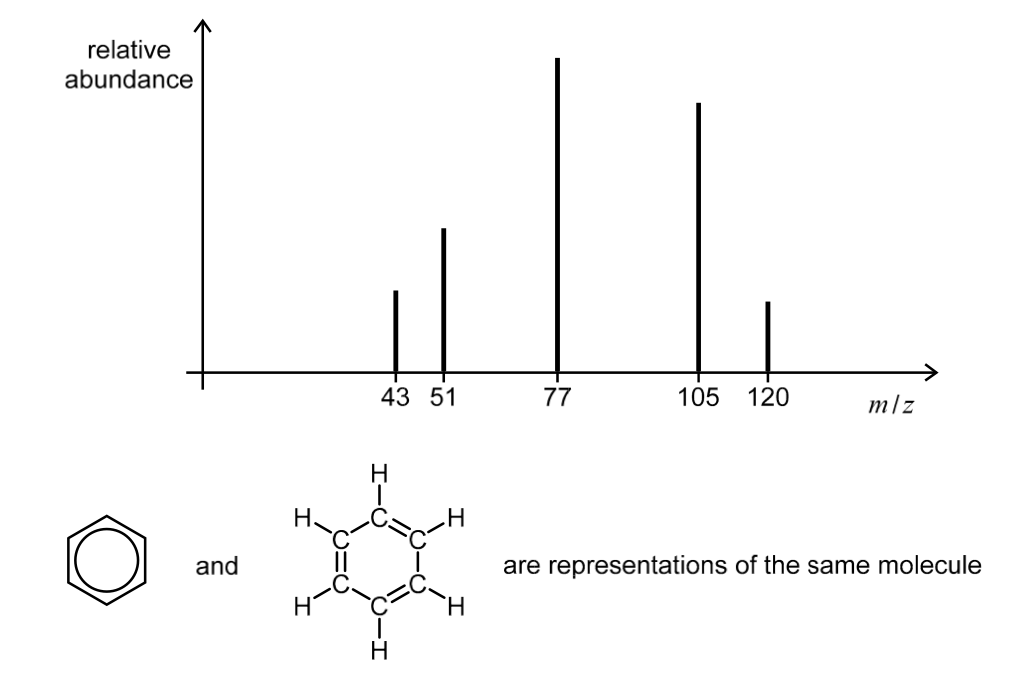
Which of the following could be the structure of Z?
( values: C = 12; H = 1; O = 16)
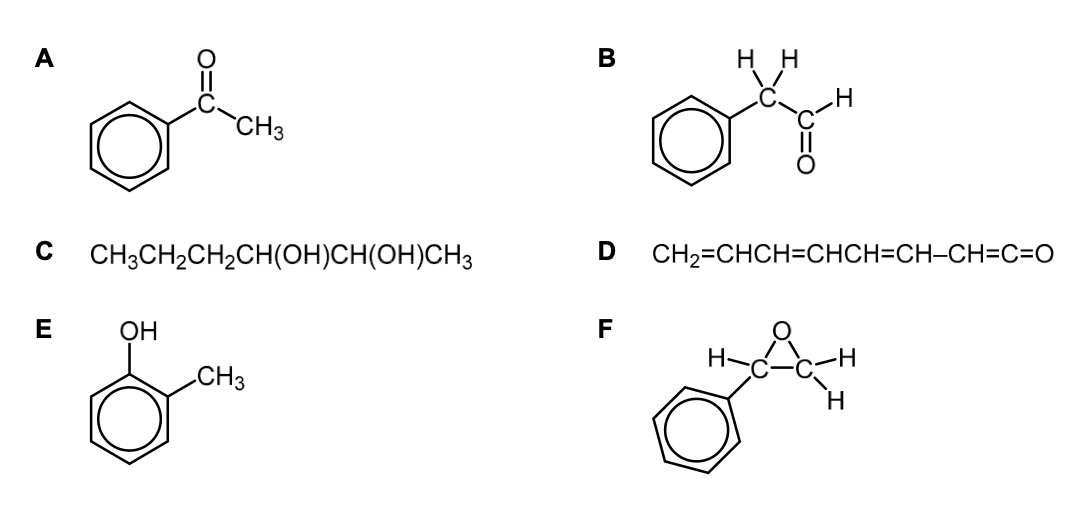
The mass spectrum of compound Z is given showing the mass-to-charge ratio (m/z) of the molecular ion and its fragments.
Which of the following could be the structure of Z?
( values: C = 12; H = 1; O = 16)
- A.Acetophenone (a benzene ring attached to a carbonyl group, which is attached to a methyl group)
- B.Phenylacetaldehyde (a benzene ring attached to a CH₂ group, which is attached to a CHO group)
- C.
- D.
- E.1-Phenylethanol (a benzene ring attached to a CH(OH)CH₃ group)
- F.2-Phenyloxirane (a benzene ring attached to an epoxide ring with one other carbon atom)
Answer: A
Question 31
1 markThe time it takes the ion to travel through the flight tube in a time-of-flight mass spectrometer is .
How long would it take the ion to travel through the same flight tube?
How long would it take the ion to travel through the same flight tube?
- A.
- B.
- C.
- D.
- E.
- F.
- G.
- H.
Answer: F
Question 32
1 markA paper coffee cup is lined with a thin layer of plastic to make it waterproof. This plastic makes up 5% of the mass of the cup and has the following molecular structure.
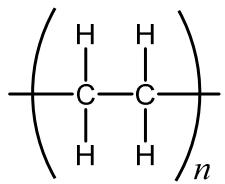
of a gaseous hydrocarbon monomer (measured at room temperature and pressure) was used to make a certain number of plastic-lined cups.
It is proposed that a more environmentally-friendly, biodegradable plastic, poly(lactic acid), could be used instead in the same proportions by mass (5%). Assume that any polymerisation reaction has a 100% yield.
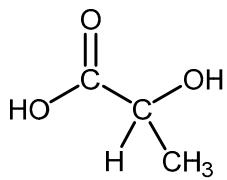
What mass of lactic acid () is required to make the same number of biodegradable cups?
( values: H = 1; C = 12; O = 16. Assume that one mole of a gas occupies at room temperature and pressure.)
of a gaseous hydrocarbon monomer (measured at room temperature and pressure) was used to make a certain number of plastic-lined cups.
It is proposed that a more environmentally-friendly, biodegradable plastic, poly(lactic acid), could be used instead in the same proportions by mass (5%). Assume that any polymerisation reaction has a 100% yield.
What mass of lactic acid () is required to make the same number of biodegradable cups?
( values: H = 1; C = 12; O = 16. Assume that one mole of a gas occupies at room temperature and pressure.)
- A.896 g
- B.1120 g
- C.1200 g
- D.1400 g
- E.1500 g
- F.3000 g
- G.3600 g
Answer: D
Question 33
1 markIn which of the following pairs do both molecules possess permanent dipoles in the gaseous state?
1. methylamine () and dichlorine monoxide ()
2. difluoroethyne () and sulfur hexafluoride
3. phosphorus trichloride and xenon tetrafluoride
1. methylamine () and dichlorine monoxide ()
2. difluoroethyne () and sulfur hexafluoride
3. phosphorus trichloride and xenon tetrafluoride
- A.none of them
- B.1 only
- C.2 only
- D.3 only
- E.1 and 2 only
- F.1 and 3 only
- G.2 and 3 only
- H.1, 2 and 3
Answer: B
Question 34
1 markAt high temperatures, carbon dioxide reacts partially with solid carbon and forms the following equilibrium.
In an experiment, of carbon dioxide is placed in a flask of capacity containing no air and an excess of carbon. It is then heated to a high temperature where an equilibrium between carbon dioxide and carbon monoxide is established. At this temperature, of carbon dioxide converts to carbon monoxide and the value of the equilibrium constant, , is .
As it is a solid, carbon is not included in the equilibrium constant expression.
What is the relationship between the value of and ?
In an experiment, of carbon dioxide is placed in a flask of capacity containing no air and an excess of carbon. It is then heated to a high temperature where an equilibrium between carbon dioxide and carbon monoxide is established. At this temperature, of carbon dioxide converts to carbon monoxide and the value of the equilibrium constant, , is .
As it is a solid, carbon is not included in the equilibrium constant expression.
What is the relationship between the value of and ?
- A.
- B.
- C.
- D.
- E.
Answer: B
Question 35
1 markA student carried out an experiment to find the mass of the active ingredient calcium carbonate () in an indigestion tablet. The student crushed the tablet and placed it in a beaker.
The student added of hydrochloric acid, an excess, to the tablet. When the reaction was complete, the reaction mixture was all transferred to a volumetric flask and deionised water added to make the solution up to .
samples of the solution in the volumetric flask were titrated against sodium hydroxide solution. The mean titre was of sodium hydroxide solution.
Assuming that all other ingredients in the tablet are inert, what is the mass of calcium carbonate in the tablet?
The student added of hydrochloric acid, an excess, to the tablet. When the reaction was complete, the reaction mixture was all transferred to a volumetric flask and deionised water added to make the solution up to .
samples of the solution in the volumetric flask were titrated against sodium hydroxide solution. The mean titre was of sodium hydroxide solution.
Assuming that all other ingredients in the tablet are inert, what is the mass of calcium carbonate in the tablet?
- A.0.264 g
- B.0.680 g
- C.1.36 g
- D.1.87 g
- E.2.72 g
Answer: B
Question 36
1 markEllingham diagrams show how the quantity for a reaction varies over a range of temperatures.
The values for different reactions can be combined using Hess's law.
For a reaction to be able to occur, the overall value of must be less than zero.
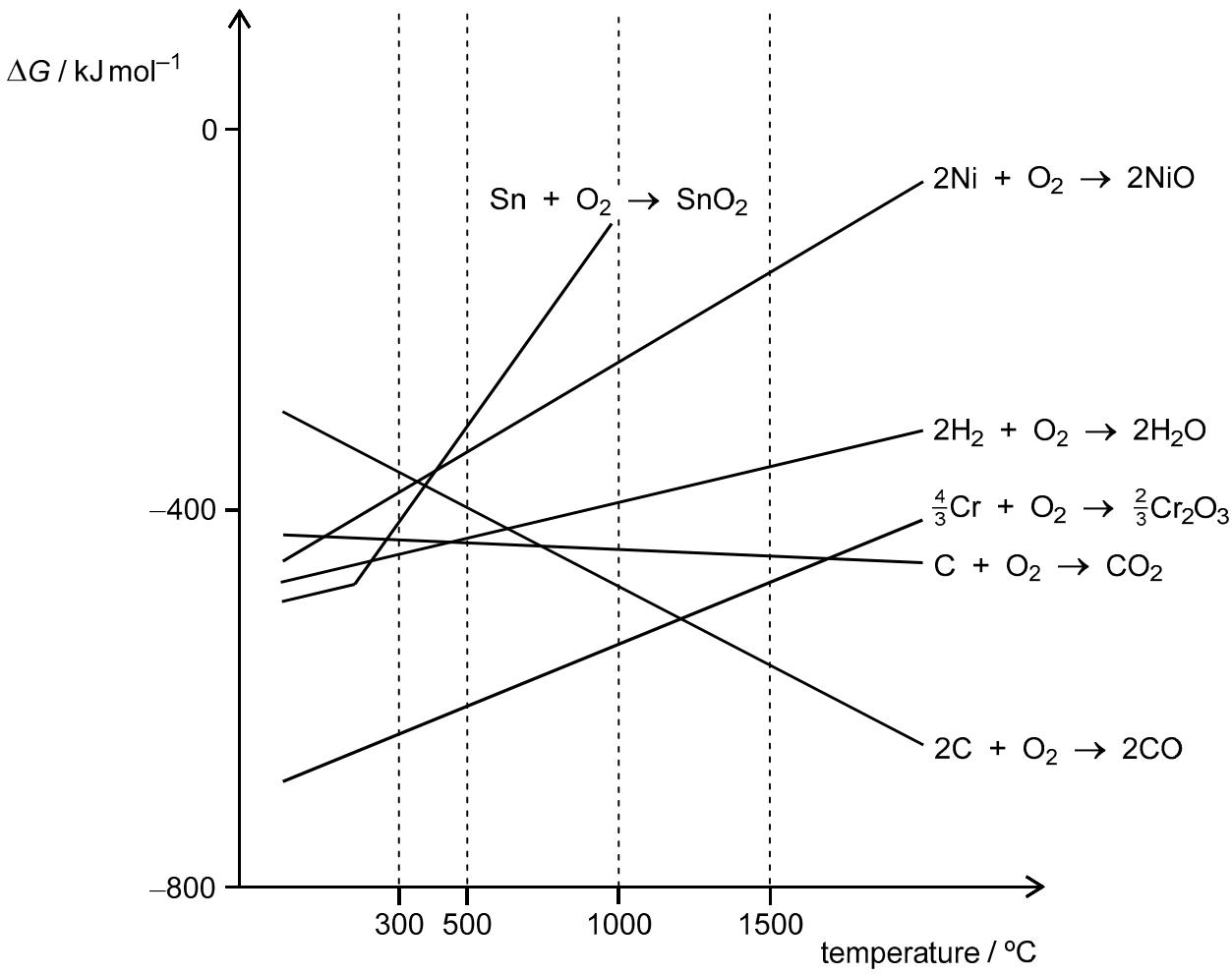
Using the Ellingham diagram shown, which one of the following statements is correct?
The values for different reactions can be combined using Hess's law.
For a reaction to be able to occur, the overall value of must be less than zero.
Using the Ellingham diagram shown, which one of the following statements is correct?
- A.Nickel can reduce tin(IV) oxide at 300 °C.
- B.Carbon can reduce chromium(III) oxide at 1500 °C forming carbon dioxide and chromium.
- C.Chromium(III) oxide and nickel oxide will decompose to their elements at all the temperatures shown.
- D.Chromium will react with steam at all the temperatures shown.
- E.Nickel oxide can be reduced by carbon at 300 °C forming carbon monoxide and nickel.
Answer: D
Question 37
1 mark ions can cause the reduction of ions to in acidic solution. During this process, the ions are oxidised to ions.
What is the minimum volume of sulfuric acid required to provide sufficient hydrogen ions to allow to reduce of ions completely to ?
What is the minimum volume of sulfuric acid required to provide sufficient hydrogen ions to allow to reduce of ions completely to ?
- A.no sulfuric acid is required
- B.
- C.
- D.
- E.
- F.
- G.
Answer: C
Question 38
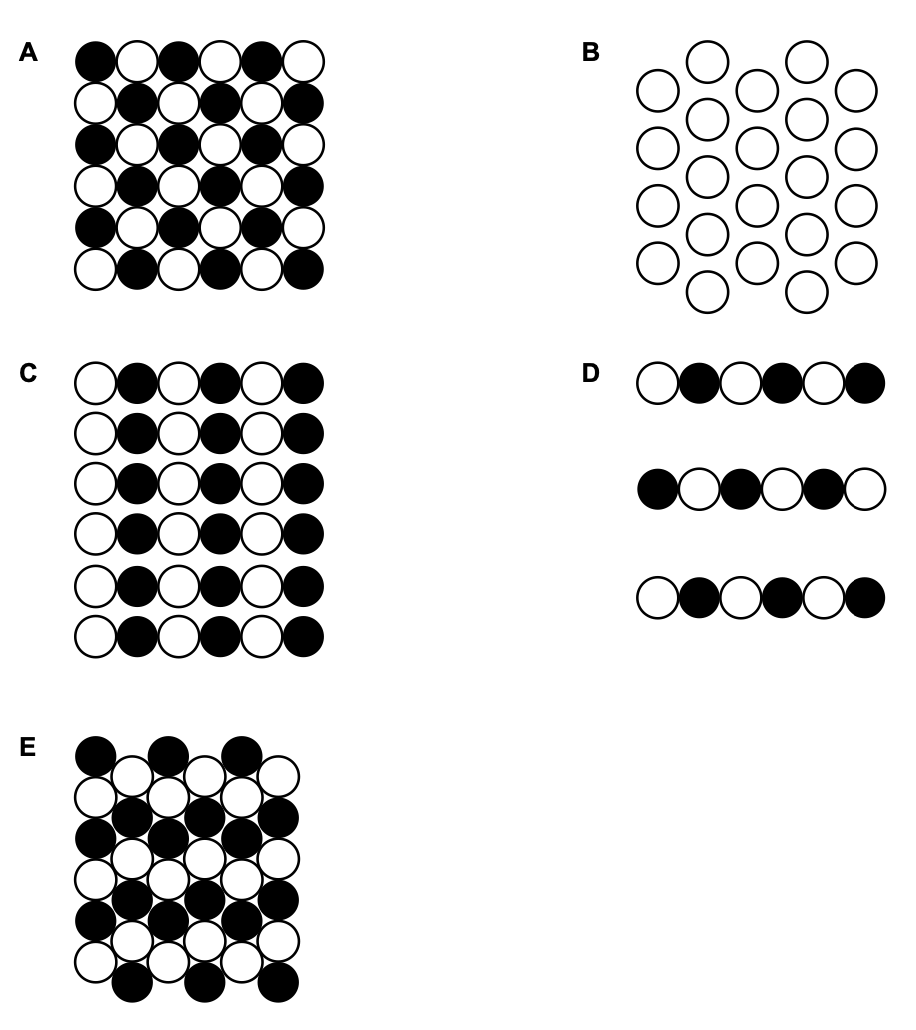
1 markSodium chloride is an ionic compound which forms highly ordered crystals of ions when in the solid state. This is called a lattice.
A lattice can be thought of as a stack of layered planes of ions.
In the following diagrams, the shaded and non-shaded circles represent sodium and chloride ions, respectively.
Which of the following is not a representation of a plane present in a sodium chloride lattice?
A lattice can be thought of as a stack of layered planes of ions.
In the following diagrams, the shaded and non-shaded circles represent sodium and chloride ions, respectively.
Which of the following is not a representation of a plane present in a sodium chloride lattice?
- A.A square grid where each ion is surrounded by four ions of the opposite charge.
- B.A hexagonal close-packed arrangement of ions of the same charge.
- C.A square grid where rows alternate between containing only shaded ions and only non-shaded ions.
- D.A single row of alternating shaded and non-shaded ions. Two such rows are shown separately.
- E.A grid where each ion is surrounded by two ions of the opposite charge and two ions of the same charge, forming a checkerboard pattern.
Answer: E
Question 39
1 markWhen bromine reacts with (Z)-pent-2-ene, an intermediate called a bromonium ion forms. This is then attacked by the bromide ion to give the 2,3-dibromopentane addition product.
The mechanism is shown:
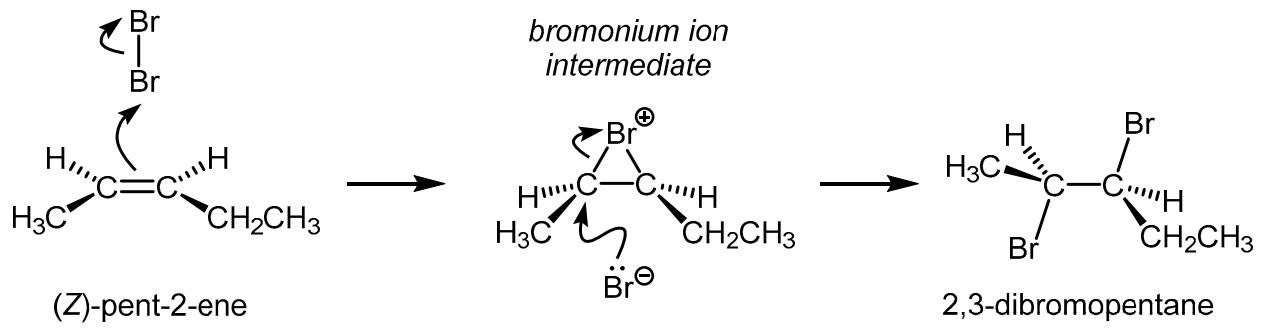
In a different reaction (E)-but-2-ene is reacted with bromine in an addition reaction. This reaction also occurs via a bromonium ion intermediate.
Which of the following structures show the final product of the reaction of (E)-but-2-ene with bromine?
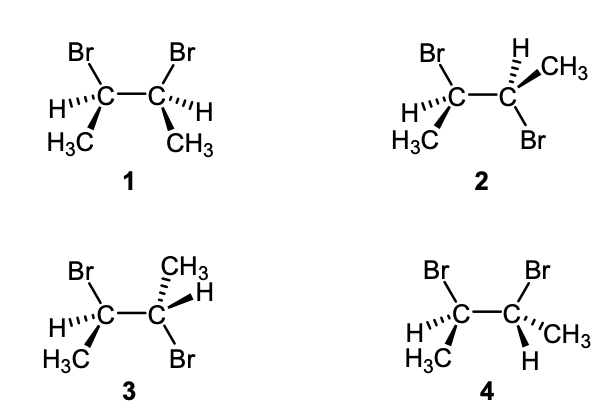
The mechanism is shown:
In a different reaction (E)-but-2-ene is reacted with bromine in an addition reaction. This reaction also occurs via a bromonium ion intermediate.
Which of the following structures show the final product of the reaction of (E)-but-2-ene with bromine?
- A.structures 1 and 2 only
- B.structures 1 and 3 only
- C.structures 1 and 4 only
- D.structures 2 and 3 only
- E.structures 2 and 4 only
- F.structures 3 and 4 only
- G.structures 1, 2, 3 and 4
Answer: B
Question 40
1 markBoth oxygen and carbon monoxide bind reversibly to haemoglobin.
For the purposes of this question, assume that only one molecule of either oxygen or carbon monoxide can bind to haemoglobin at any one time.
Within the human body, carbon monoxide is 200 times more effective than oxygen in binding to haemoglobin available in human blood. The binding efficiency is the equilibrium constant for this process and you may assume that the system is at equilibrium.
The effects of carboxy-haemoglobin in humans can typically be observed when it reaches 5% of the concentration of oxy-haemoglobin in their blood.
Assume that oxygen and carbon monoxide have the same molar solubility in blood.
What is the minimum proportion of carbon monoxide molecules in dry air, expressed as parts per million (ppm), that will result in a 5% ratio of carboxy-haemoglobin molecules to oxy-haemoglobin molecules in blood?
For the purposes of this question, assume that only one molecule of either oxygen or carbon monoxide can bind to haemoglobin at any one time.
Within the human body, carbon monoxide is 200 times more effective than oxygen in binding to haemoglobin available in human blood. The binding efficiency is the equilibrium constant for this process and you may assume that the system is at equilibrium.
The effects of carboxy-haemoglobin in humans can typically be observed when it reaches 5% of the concentration of oxy-haemoglobin in their blood.
Assume that oxygen and carbon monoxide have the same molar solubility in blood.
What is the minimum proportion of carbon monoxide molecules in dry air, expressed as parts per million (ppm), that will result in a 5% ratio of carboxy-haemoglobin molecules to oxy-haemoglobin molecules in blood?
- A.10 ppm
- B.21 ppm
- C.52.5 ppm
- D.210 ppm
- E.1000 ppm
- F.5250 ppm
Answer: C