Algebraic Manipulation and Equations for ESAT Mathematics 1
Updated July 2026
Algebra is a core component of ESAT Mathematics 1, covering the manipulation of notation, the application of index laws, and the resolution of linear and quadratic equations. Students must learn to factorise complex expressions, rearrange formulae, and interpret graphs in real contexts. Mastery of these skills allows candidates to translate situational problems into solvable algebraic models.
Algebra involves using symbols to represent numbers in formulae and equations, where expressions are manipulated via established rules like index laws and factorisation to find unknown variables or describe relationships. The most critical application is the solving of simultaneous systems, which represents the intersection of multiple mathematical constraints.
Algebraic Notation and Index Laws
Algebraic notation allows us to express mathematical relationships concisely. Standard conventions include writing instead of , instead of , and instead of . When combining letters and numbers into terms, numerical coefficients always come first, followed by letters in alphabetical order, such as .
Index laws govern the multiplication and division of powers. To multiply powers with the same base, we add the indices: . To divide them, we subtract the indices: . When raising a term to a further power, we multiply the indices: . Note that any non zero base raised to the power of zero is , and is simply . For negative powers, . Fractional powers represent roots, where and .
Substitution and Definitions
Understanding vocabulary is vital for interpreting ESAT questions. An expression like does not have an equals sign, whereas an equation like is true only for specific values of the variable. An identity, denoted by , is true for all values of the variable, such as . An inequality describes the relative size of expressions using symbols like and . A factor is a quantity that divides exactly into another without a remainder.
When substituting numerical values into formulae, the BIDMAS order of operations must be followed. For example, if and in the expression , we evaluate indices and brackets first: .
Expanding and Factorising Expressions
Like terms are terms that are identical except for their numerical coefficients, such as and . These can be collected by adding or subtracting. Expanding involves multiplying a single term over a bracket, , or expanding binomials using methods like the grid method.
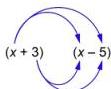
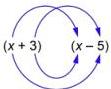
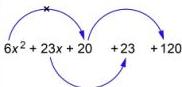
Factorising is the reverse of expanding. For a quadratic of the form , we find two numbers that multiply to give and add to give . For , we can split the middle term. For example, to factorise , we find numbers that multiply to () and add to . These are and .
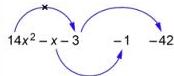
Special cases include the difference of two squares, where . For example, .
Rearranging Formulae and Rational Expressions
Changing the subject of a formula involves isolating a specific variable. You can add, subtract, multiply, or divide both sides by the same quantity, or square/root both sides. For example, to make the subject of , we square to get , then multiply by and subtract to reach .
Rational expressions are algebraic fractions. They are simplified by factorising the numerator and denominator and then cancelling common factors. To add or subtract them, find a common denominator, ideally the lowest common multiple (LCM). For example, .
Coordinates and Linear Graphs
Points are located using coordinates across four quadrants.
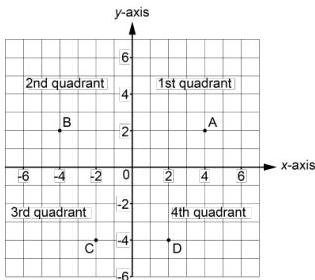
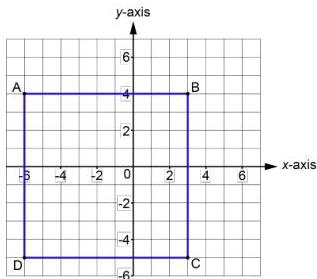
Linear functions follow , where is the gradient and is the intercept. Parallel lines share the same gradient. Perpendicular lines have gradients and such that . The gradient between two points is calculated as .
Quadratic Functions and Their Features
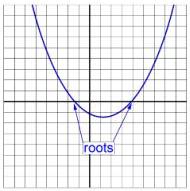
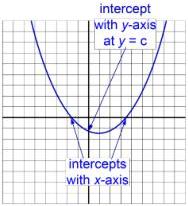
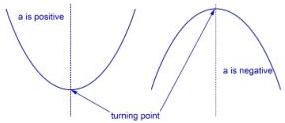
The graph of is a parabola. If , it is U-shaped: if , it is shaped. The roots are where the graph crosses the axis (). The turning point (vertex) is the maximum or minimum point and can be found by completing the square: .
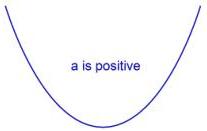
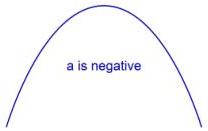
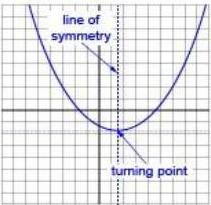
For , completing the square gives . The turning point is where the bracket is zero, at .
Other Graph Types
Students must recognise and sketch:
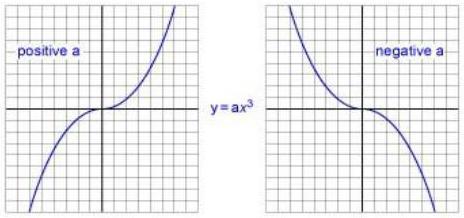
- Cubic functions: has rotational symmetry about the origin.
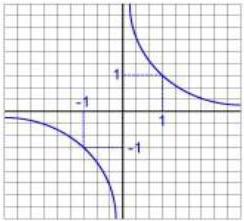
- Reciprocal functions: exists in the first and third quadrants and never touches the axes.
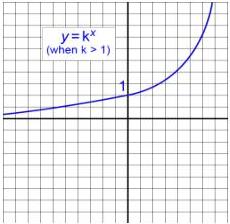
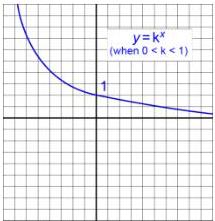
- Exponential functions: always passes through . If , it shows rapid growth: if , it shows decay.
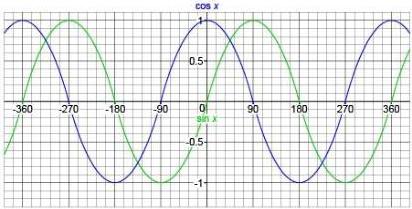
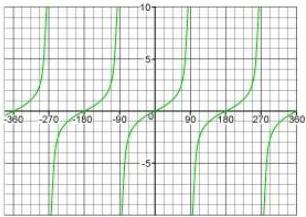
- Trigonometric functions: and oscillate between and , while has periodic asymptotes.
Graphs in Context
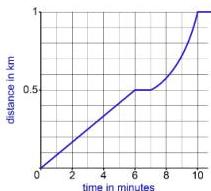
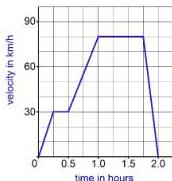
Graphs can model real world situations. In a distance time graph, the gradient is the speed. In a speed time graph, the gradient is acceleration and the area under the graph is the total distance travelled.
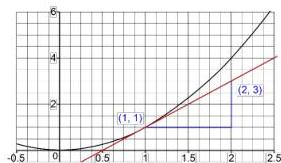
To find the area under a curve, we divide the region into strips, often trapezia, and sum their areas. The gradient of a curve at any point is found by drawing a tangent and calculating its slope.
Solving Equations and Simultaneous Systems
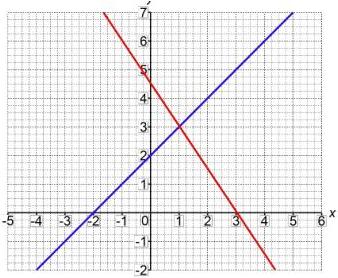
Simultaneous equations can be solved algebraically or graphically. To solve graphically, plot both lines and find the intersection. Algebraically, use elimination or substitution. For a system with one linear and one quadratic equation, always use substitution. For example, if and , substitute into the quadratic equation to solve for , then find .
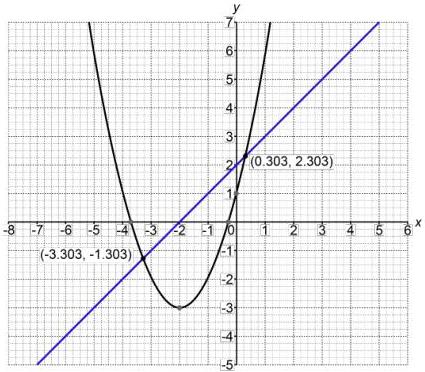
Quadratic equations are solved by factorising, completing the square, or the quadratic formula: .
Linear Inequalities
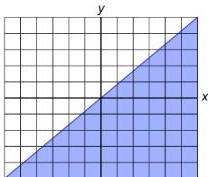
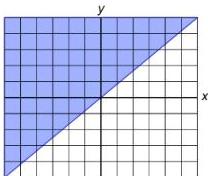
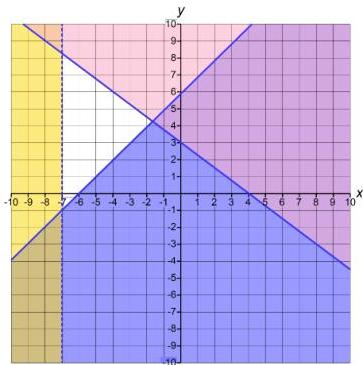
Inequalities are solved similarly to equations, but multiplying or dividing by a negative number reverses the sign. Solutions are represented on number lines: open circles for or and solid circles for or . On graphs, regions are defined by boundary lines, often shading out the unwanted area.
Sequences
Sequences can be defined by term to term rules (how to get the next number) or position to term rules (the th term).
A linear sequence has a constant first difference. If the difference is , the th term is . A quadratic sequence has a constant second difference. The th term is , where is half the second difference. For example, the sequence has a constant second difference of , so . By comparing with , we find the th term is .
Key takeaways
- Master index laws for positive, negative, and fractional powers to simplify complex algebraic terms.
- Solve quadratic equations using three primary methods: factorising, the quadratic formula, and completing the square.
- Understand the geometric link where the gradient of a distance time graph represents speed and the area under a speed time graph represents distance.
- Utilise substitution to solve simultaneous systems containing one linear and one quadratic equation.
- Identify sequences by their differences: constant first differences indicate linear sequences, while constant second differences indicate quadratic sequences.
When solving simultaneous equations where one is quadratic, always substitute the linear expression into the quadratic one rather than the other way around to avoid complex radical terms.
A common error is forgetting that squaring a negative number results in a positive value. This is especially important when evaluating the discriminant in the quadratic formula.
Completing the square is a powerful tool because it does more than just solve equations: it immediately identifies the vertex of the parabola, which represents the maximum or minimum value of the function.
Frequently asked questions
What is the difference between an equation and an identity?
An equation is only true for specific values of the variable (e.g., only when ). An identity is true for all possible values of the variable (e.g., ).
How do I find the equation of a line perpendicular to passing through ?
The gradient of the original line is . The perpendicular gradient is the negative reciprocal, . Since it passes through the origin , the intercept is . Thus, the equation is .
How do I calculate the area under a non linear graph?
Divide the area into several vertical strips (trapezia). Calculate the area of each trapezium using and sum them to find the approximate total area.
When do I need to flip the inequality sign?
You must reverse the direction of the inequality sign whenever you multiply or divide both sides of the inequality by a negative number.