Differentiation and its Applications for the ESAT
Updated July 2026
Differentiation measures the rate of change of a function and defines the gradient of its tangent. For the ESAT, you must be able to differentiate sums of for rational , identify stationary points, and classify strictly increasing or decreasing functions using first and second derivatives.
The derivative of is for any rational . For complex fractions or products, expressions must be simplified into sums of powers before differentiating term by term.
Understanding Rates of Change and Gradients
To understand differentiation, you must grasp the concept of a rate of change. A common example is speed, which tells us how fast distance changes compared to time. A speed of means distance changes at a rate of metres for every one second that passes. Similarly, acceleration is the rate of change of speed, measured in metres per second changed per second, often written as or .
In mathematics, the gradient of a line is also a rate of change. It tells us how much the coordinate changes for every unit move in the direction. This means the gradient of a distance-time graph represents speed, and the gradient of a speed-time graph represents acceleration. For a curve, the rate of change at a specific point is defined as the gradient of the tangent to the curve at that point.
Differentiation Notation and the Power Rule
When we have an expression for in terms of , such as , the derivative provides the gradient of the tangent at any given . In this case, . You should be familiar with the following notation:
- First derivative: or
- Second derivative: or
- Physics dot notation: for and for
The fundamental rule for differentiating a power of is . This applies to any rational , including fractions and negative numbers.
Simplification and Term-by-Term Differentiation
For the ESAT, you are expected to differentiate simple expressions involving sums of powers. If an expression is not already in this form, you must simplify it first. Advanced rules like the chain, product, or quotient rules are not required: instead, expand brackets and divide through by denominators.
Worked Example: Differentiate the expression .
- Expand the numerator: .
- Divide each term by : .
- Differentiate term by term: .
- Final result: or .
Stationary Points and the Second Derivative
Stationary points occur where the tangent to a curve is horizontal, meaning the gradient . To classify these points as local maxima or local minima, we use the second derivative, , which measures how the gradient itself is changing.
1. Local Minimum: If and at a point, it is a minimum. This is because the gradient is increasing (changing from negative to positive).
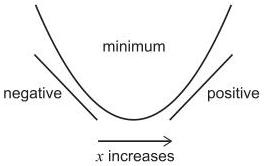
2. Local Maximum: If and at a point, it is a maximum. Here, the gradient is decreasing (changing from positive to negative).
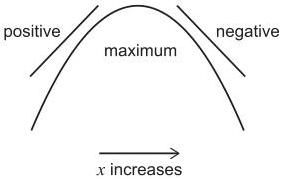
Note on Logic: These conditions are sufficient but not necessary. For example, if , there is a minimum at , even though . If both the first and second derivatives are zero, the point could be a maximum, a minimum, or a point of inflexion.
Worked Example: Classifying Stationary Points
Consider the cubic .
- Find the first derivative: .
- Set to zero to find stationary points: . Thus and .
- Find the second derivative: .
- Evaluate at : . Since , this is a local minimum.
- Evaluate at : . Since , this is a local maximum.
Strictly Increasing and Decreasing Functions
A strictly increasing function always slopes upwards: its value increases as increases. A strictly decreasing function always slopes downwards.
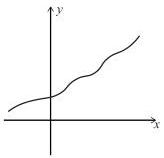
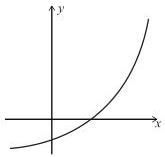
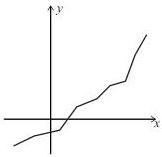
The ESAT uses the following sufficient conditions:
- If for all in an interval, the function is strictly increasing in that interval.
- If for all in an interval, the function is strictly decreasing in that interval.
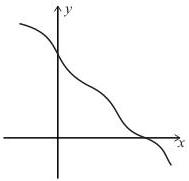
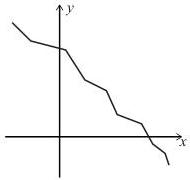
Note that some functions may be strictly increasing even if the derivative is not always greater than zero (for example, at points where the derivative is zero or undefined due to a corner). However, for the simple polynomials tested in the ESAT, you will primarily use the and tests.
Points of Inflexion
You are expected to have a qualitative understanding of points of inflexion, such as the one found at the origin for . While you should be able to recognise their shape when sketching polynomial graphs, you are not required to use advanced differentiation techniques to identify them formally.
Key takeaways
- The power rule is valid for all rational values of .
- Always simplify algebraic fractions and expand brackets to create a sum of powers before differentiating.
- Stationary points are found by solving .
- The second derivative test classifies stationary points: for a minimum and for a maximum.
- A function is strictly increasing in an interval if throughout that interval.
When differentiating, be extremely careful with negative and fractional indices. For example, subtracting from gives , not . Always write out the simplified expression clearly before starting the differentiation process.
Do not assume that automatically means a point of inflexion. It can occur at maxima (like ) or minima (like ) as well. Use the logic of 'sufficient but not necessary' carefully.
Thinking of the second derivative as the 'acceleration' of the curve's height helps intuitively understand why a positive value indicates a 'cup' shape (minimum) and a negative value indicates a 'cap' shape (maximum).
Frequently asked questions
How do I differentiate an expression like or ?
Rewrite them as powers of first: and . Then apply the power rule to get and respectively.
What should I do if at a stationary point?
The second derivative test is inconclusive. You should check the gradient or values slightly to the left and right of the point to determine if it is a maximum, minimum, or point of inflexion.
Do I need to learn the product rule or the chain rule for the ESAT?
No, these are excluded from the specification. Any expression provided can be simplified into a sum of terms using algebraic expansion or division.
Is strictly increasing even though the gradient is zero at the origin?
Yes. A function is strictly increasing if implies . While , the function still satisfies this definition across the whole real number line.