Work, Energy, and Power for the ESAT
Updated July 2026
This guide covers the fundamental principles of energy in mechanics. You will learn to calculate work done, kinetic energy, and gravitational potential energy. Understanding energy transfer, power, and efficiency is essential for solving ESAT physics problems involving the transformation and conservation of energy in mechanical systems.
Energy is a scalar quantity transferred between systems via work (), where work is defined as the force multiplied by the distance moved in the direction of that force. In any closed system, energy is conserved, although it may be converted between different forms such as kinetic energy ( rac{1}{2}mv^2) or potential energy ().
Work Done and Force
When an external force acts on an object and causes it to move through a distance, energy is transferred. This process of energy transfer is defined as work. It is important to note that work is only done if there is a component of the distance moved along the same line as the force. If the displacement is in the same direction as the force, energy is transferred to the object. If the displacement is in the opposite direction, energy is removed from the object.
The mathematical definition of work is given by the product of the force and the distance moved in the direction of that force:
Where is work, is force, and is the distance component along the line of action of the force. While force and displacement are vectors, work is a scalar quantity. It can be positive or negative but has no direction. The SI unit for work is the joule (). One joule is defined as the work done when a force of moves an object through a distance of . In calculations, ensure units are consistent: energy in joules, force in newtons, and distance in metres.
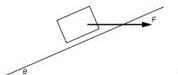
When the force and the distance moved are not in the same direction, we use trigonometry to find the parallel component. If an object moves a distance at an angle to the force, the work done is:
Work as a Transfer of Energy
Work is essentially a mechanism for transferring energy. When work is done on an object, its energy increases. Conversely, when an object does work on its surroundings, its energy decreases. This is deeply linked to Newton's third law: if body A exerts a force on body B, body B exerts an equal and opposite force on body A. Since both move the same distance during contact, the energy lost by one is exactly equal to the energy gained by the other, provided no other forces are involved.
Consider two balls, A and B, colliding. If they exert a force on each other and move in the direction of A's motion, ball A does of work on ball B (). Ball B exerts a force in the opposite direction, doing of work on A. Thus, is transferred from A to B with no net loss to the system.
Gravitational Potential Energy
Gravitational potential energy (GPE) is the energy an object possesses due to its position in a gravitational field. When an object of mass is raised through a vertical height , the work done against gravity is converted into GPE:
To prove this, consider raising a mass at a constant speed. To prevent acceleration, the upward force must equal the weight . The work done over height is .
In physics problems, the 'zero point' for potential energy is arbitrary. You can define any height as (such as the floor or a table). What matters is the change in height, as the difference in energy between two points remains constant regardless of the reference level.
Worked Example: Loading a Trunk A trunk of mass is pulled up a ramp to a height of by a force.
- Work done by the pulling force: .
- Increase in GPE: .
- Work against friction: .
- Average friction force: .
Kinetic Energy
Kinetic energy is the energy of an object in motion. For an object of mass moving at speed , the kinetic energy is:
This formula can be derived by considering an object accelerated from rest by a force over distance . Since and (with ), we find . Substituting gives . The work done is . This work is stored as the kinetic energy of the object.
Power
Power is defined as the rate at which energy is transferred or the rate at which work is done. It is calculated as:
The SI unit for power is the watt (), where . For larger values, we use kilowatts ().
Note on the Kilowatt-hour (kWh): The kWh is a unit of energy, not power. It is the energy transferred by a device in one hour. Since and , then .
Worked Example: Car Power A car of mass accelerates from rest to in .
- Change in .
- Useful output power: (or ).
Conservation of Energy
The law of conservation of energy states that energy cannot be created or destroyed, only transferred between forms. In mechanical problems, we often track energy moving between 'active' and 'stored' forms.
- Active forms: Electrical, heat (thermal), light, kinetic, and sound.
- Stored forms: Chemical, gravitational potential, and strain (elastic) potential energy.
Worked Example: Oscillating Spring A mass is attached to an unstretched spring and released. It falls to its lowest point.
- Loss of GPE: .
- Gain in strain energy: .
- By conservation, , so .
Useful Energy and Efficiency
Every energy transfer device has a intended purpose. Useful energy is the energy converted into the desired form, while wasted energy is converted into other forms (usually heat due to friction). For instance, in a lightbulb, light is useful and heat is wasted; in a heater, heat is useful and light is wasted.
The efficiency of a device is the ratio of useful output to total input:
Efficiency can be calculated using either energy or power values, provided the units are consistent. Total output always equals the sum of useful and wasted output.
Worked Example: Heater Efficiency A heater draws from a supply and produces of thermal energy.
- Total input power: .
- Efficiency: .
Key takeaways
- Work () is a scalar measure of energy transfer, measured in Joules ().
- Gravitational Potential Energy () and Kinetic Energy () are the primary mechanical energy stores.
- Power () is the rate of energy transfer, measured in Watts (), where .
- The law of conservation of energy states that total energy in a closed system remains constant.
- Efficiency is the ratio of useful output to total input, often expressed as a percentage.
In ESAT questions involving slopes, always check if the force provided is parallel to the slope or horizontal. If the force is horizontal and the movement is along the slope, you must use the component of the distance in the direction of the force ().
Do not confuse the units of power and energy. Candidates often mistakenly use watts in energy equations or joules in power equations. Always verify that your time units are in seconds when calculating power in watts.
Energy methods are often much simpler than using Newton's laws and kinematics. If a question asks for final speed but the acceleration is not constant (like a ball rolling down a curved hill), conservation of energy () provides the answer where SUVAT equations would fail.
Frequently asked questions
Can work be negative?
Yes. Work is negative when the force acts in the opposite direction to the motion. For example, friction does negative work on a sliding block because it removes kinetic energy from the system and converts it to heat.
Is the kilowatt-hour (kWh) a unit of power or energy?
It is a unit of energy. Because , it follows that . A kilowatt-hour represents power () multiplied by time (), resulting in joules.
Does GPE depend on the path taken to reach a height?
No. GPE only depends on the vertical height difference (). Whether you lift an object straight up or pull it up a long, winding ramp, the change in GPE is identical, though the work done against friction will differ.
Why is 100% efficiency impossible in mechanical systems?
In real mechanical systems, there is always some friction between moving parts or air resistance. This causes a portion of the input energy to be converted into thermal energy (heat) which dissipates into the surroundings and is usually considered 'wasted'.