Mitosis and the Cell Cycle for the ESAT
Updated July 2026
Mitosis is a fundamental form of cell division that produces two genetically identical daughter cells for growth and repair. This page explores the stages of the mitotic cell cycle, the importance of interphase for DNA replication, and how mutations in this process can lead to the development of cancer.
The mitotic cell cycle consists of interphase (growth and DNA replication) followed by mitosis (nuclear division and cytokinesis), resulting in two daughter cells that are genetically identical to each other and the original parent cell.
Growth and the Zygote
All living organisms undergo growth during their lifespan. Multicellular organisms, such as humans, are composed of trillions of cells, yet every human life begins as a single cell: a fertilised egg cell known as a zygote.
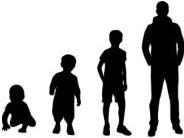
To develop from this single cell into a complex multicellular organism, the zygote must divide to produce two new daughter cells, which in turn divide further. This specific process of cell division in eukaryotic cells that facilitates growth is known as mitosis.
The Process of Mitosis
Mitosis involves the division of the cell nucleus to ensure that genetic information is distributed correctly. During this process, the nucleus breaks down and the DNA is split into two new, identical nuclei. Following the nuclear division, the entire cell splits into two new daughter cells through a process called cytokinesis.
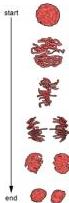
The resulting daughter cells produced by mitosis have three defining characteristics:
- They are genetically identical to each other.
- They are genetically identical to the parent cell that produced them.
- They contain the same number of chromosomes as the parent cell.
The Cell Cycle and Interphase
Cell division does not happen in isolation. It is part of a regulated sequence of events known as the cell cycle. Before a cell can divide, it must enter a period of preparation called interphase.
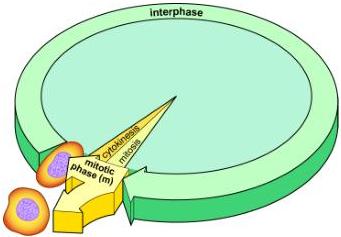
During interphase, several vital processes occur:
- The cell grows in size.
- The chromosomes in the nucleus are replicated (copied).
- The cell undergoes respiration to provide the energy required for the upcoming division.
Chromosome Replication
Immediately after a previous division, each chromosome consists of a single molecule of DNA. During interphase, every DNA molecule is replicated. This ensures that a complete, identical set of chromosomes can be passed to each daughter cell.

Before replication, a chromosome contains one DNA molecule. After replication, it consists of two identical sister chromatids, each being a single DNA molecule. These appear at the beginning of mitosis before being pulled apart.
The Roles of Mitosis
Mitosis serves four primary functions in living organisms:
- Growth: Increasing the total number of cells in an organism.
- Repair: Fixing damaged tissues by producing new cells.
- Replacement: Substituting worn-out or dead cells with new ones.
- Asexual Reproduction: Allowing some species to produce offspring from a single parent.
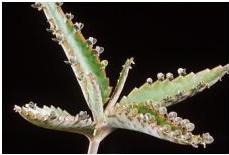
For example, some plants produce tiny plantlets on their leaves through mitosis. These plantlets eventually drop to the ground and grow into new plants that are genetically identical clones of the parent.
Mitosis and Cancer
The cell cycle includes checkpoints during interphase to ensure the cell is healthy and DNA has been copied accurately. If an error or mutation is detected that cannot be repaired, the cell is usually destroyed. However, if a defective cell survives and continues to divide, it may lead to uncontrolled cell division. This results in a mass of cells called a tumour, which is how cancer develops.
Worked Example: Identifying Mitosis
Consider the following photomicrograph of tissue undergoing mitosis:
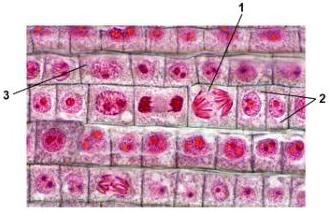
Exercise 9 Questions and Answers:
a) Are the cells animal or plant cells? Explain your answer. They are plant cells because a visible cell wall is present surrounding the membrane.
b) Name three parts of a cell visible in the photomicrograph. Any three from: cell wall, nucleus, cytoplasm, or cell membrane.
c) Describe what is happening to the cells labelled 1, 2, and 3.
- Cell 1: Undergoing mitosis. The DNA is in chromosome pairs that are being pulled apart to opposite ends of the cell.
- Cells 2: These are two new daughter cells that have just completed mitosis and cytokinesis. They are roughly half the size of a mature cell.
- Cell 3: A mature cell just starting mitosis. The nucleus is beginning to break down, indicated by the blurring of the nuclear membrane.
d) A student wrote: 'During the cell cycle, interphase is the stage in which nothing happens'. Why is this incorrect? This is false because interphase is highly active: the cell grows, replicates its chromosomes, respires for energy, and performs its normal metabolic functions.
Key takeaways
- The cell cycle consists of interphase (growth, respiration, and DNA replication) and mitosis (cell division).
- Mitosis results in two daughter cells that are genetically identical to each other and the original parent cell.
- The primary roles of mitosis include organism growth, tissue repair, cell replacement, and asexual reproduction.
- DNA replication during interphase is essential to ensure each daughter cell receives a full set of chromosomes.
- Uncontrolled mitosis caused by DNA mutations can lead to the formation of tumours and cancer.
In ESAT questions, pay close attention to whether a cell is described as 'genetically identical'. If it is, the process involved is almost certainly mitosis, not meiosis.
A common misconception is that interphase is a 'resting' stage. It is actually the most active part of the cell cycle regarding metabolism and DNA synthesis.
Checkpoints in the cell cycle are governed by specific proteins. When the genes coding for these proteins mutate, the regulatory 'brakes' on the cell cycle are lost, which is the fundamental biological cause of cancer.
Frequently asked questions
What is the difference between mitosis and the cell cycle?
The cell cycle is the entire life sequence of a cell, including its growth and preparation phases. Mitosis is specifically the part of the cell cycle where the nucleus divides to produce two new nuclei.
Why must DNA be replicated before mitosis begins?
If DNA were not replicated, each daughter cell would only receive half of the genetic information. Replication ensures that both daughter cells are genetically identical to the parent cell and have a full set of chromosomes.
What is cytokinesis?
Cytokinesis is the final stage of cell division where the cytoplasm splits, physically dividing the parent cell into two separate daughter cells.