Movement Across Cell Membranes for ESAT Biology
Updated July 2026
Understanding how substances move across cell membranes via diffusion, osmosis, and active transport is essential for the ESAT. This section explores these mechanisms, their driving forces such as water potential and concentration gradients, and their critical roles in biological and non-biological systems through detailed examples and experimental models.
Substances move across cell membranes via passive processes (diffusion and osmosis) which move down a concentration or water potential gradient, or via active transport which uses energy from respiration to move substances against a gradient.
A membrane acts as a selective barrier. Every cell possesses a cell membrane that serves as a highly flexible boundary, preventing the escape of cell contents and regulating the passage of substances. Processes within cells necessitate the movement of raw materials, such as water, nutrients, and ions, into the cell, while waste products must be removed to prevent toxicity. Prokaryotes require nitrogen, carbon, salts, and water for growth, while plants need carbon dioxide for photosynthesis and animals need oxygen for aerobic respiration in mitochondria. Movement across the membrane occurs via passive processes (diffusion and osmosis) that do not require energy, or active processes (active transport) that require the cell to expend energy.
Diffusion
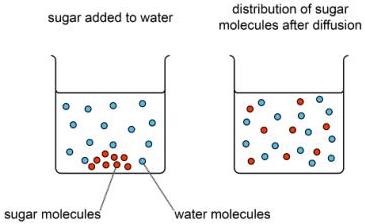
Diffusion is defined as the net movement of molecules and ions from a region of their higher concentration to a region of their lower concentration. This movement occurs down a concentration gradient and is a result of the random motion of particles in liquids and gases. Diffusion continues until the distribution of particles is uniform and there is no further net movement.
Several factors determine the rate at which diffusion occurs:
- Concentration gradient: A greater difference in concentration between two areas results in a faster rate of diffusion.
- Distance: The further molecules must travel, the longer the process takes.
- Size: Smaller particles diffuse more rapidly than larger ones.
- Surface area: A larger surface area increases the rate of diffusion.
When a substance like a sugar crystal is placed in water, it dissolves and moves from the area of highest concentration near the crystal until it is evenly distributed. This is driven by the kinetic energy of the surrounding molecules.
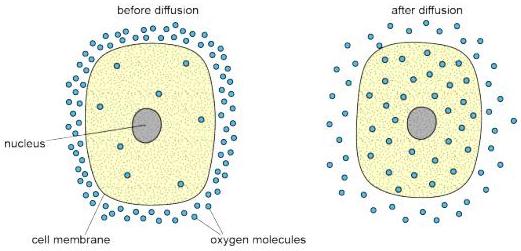
Cell membranes are described as partially permeable because they allow certain small molecules, such as oxygen, carbon dioxide, glucose, and water, to pass through while blocking larger molecules like starch and proteins. If oxygen concentration is higher outside a cell, it will diffuse inward until equilibrium is reached.
Examples of Diffusion
In living systems, diffusion is seen in:
- Gas exchange in the lungs (oxygen and carbon dioxide).
- Absorption and release of oxygen by red blood cells.
- Absorption of solutes into the bloodstream from kidney tubules.
- Nutrient absorption in the ileum.
- Neurotransmitter movement across synaptic gaps.
- Carbon dioxide absorption in palisade mesophyll cells.
- Water vapour loss during transpiration.
In non-living systems, examples include:
- The spread of perfume smell across a room.
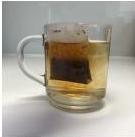
- Pigments spreading from tea leaves in hot water.
- Potassium manganate (VII) spreading in a beaker of water.
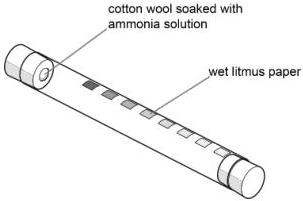
- Ammonia moving along a glass tube, detected by litmus paper.
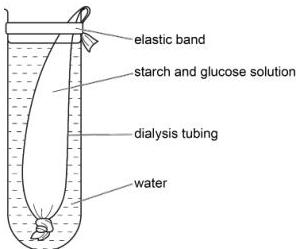
- Glucose (but not starch) moving across dialysis tubing.
Dialysis tubing can demonstrate diffusion by showing that small glucose molecules can pass through the membrane while large starch molecules cannot.
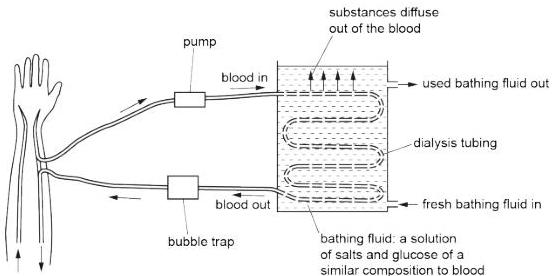
This principle is applied in kidney dialysis machines to remove urea, uric acid, and excess salts from a patient's blood.
Osmosis and Water Potential
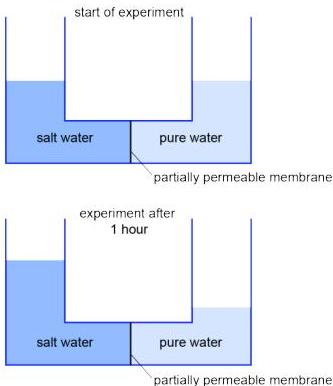
Osmosis is the net movement of water molecules from a region of higher water potential (a dilute solution) to a region of lower water potential (a concentrated solution) through a partially permeable membrane. This can be modelled using a U-shaped tube divided by a semi-permeable membrane. If pure water is on one side and salt water on the other, water moves into the salt solution, causing the water level to rise on that side.
Osmosis in Plant and Animal Cells
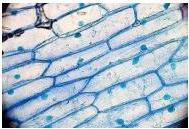
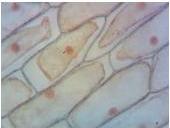
When a plant cell is placed in pure water (higher water potential), water enters the cell. The sap vacuole fills and exerts pressure against the cytoplasm and cell wall. This makes the cell turgid. The rigid cellulose cell wall prevents the cell from bursting.
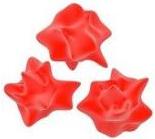
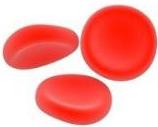
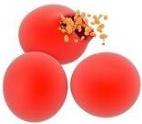
When an animal cell is placed in pure water, it lacks a cell wall. The influx of water causes the cell to swell and eventually burst, a process called haemolysis in red blood cells.
In concentrated solutions (lower water potential), both cell types lose water:
- Plant cells become flaccid as the vacuole shrinks and the cytoplasm pulls away from the cell wall.
- Animal cells become crenated (shrivelled).
Investigating Osmosis with Potato Tissue
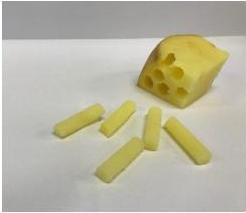
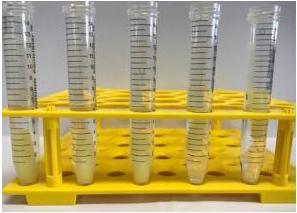
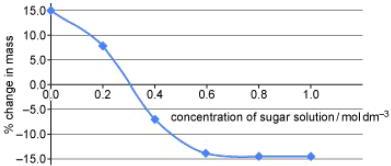
Osmosis can be measured using potato cores. When placed in pure water, they gain mass and length as cells become turgid. In concentrated sugar solutions, they lose mass and length as cells become flaccid.
Active Transport
Active transport is the movement of particles through a cell membrane from a region of lower concentration to a region of higher concentration. This process requires energy released from respiration in the form of ATP. Because it requires energy, cells involved in active transport often contain many mitochondria.
This movement is achieved by carrier proteins embedded in the membrane. These proteins use chemical energy to move specific particles across the membrane against the concentration gradient. Factors that inhibit respiration, such as lack of oxygen or respiratory poisons, will stop active transport.
Examples of Active Transport
- Root hair cells: These move mineral salts from the soil into the root, even when soil concentrations are lower than those inside the plant.
- Small intestine: Glucose is moved into the bloodstream by active transport to ensure maximum absorption after diffusion reaches equilibrium.
Worked Exercises
Exercise 6: Factors affecting diffusion How would the rate of glucose diffusion out of dialysis tubing change if: a) Temperature increased? Answer: Rate increases because molecules have more kinetic energy. b) Glucose concentration decreased? Answer: Rate decreases because the concentration gradient is lower. c) The tubing wall was thicker? Answer: Rate decreases because the diffusion distance is greater.
Exercise 7: Potato cores in solution Explain why a potato cylinder gains mass in pure water. Answer: Pure water has a higher water potential than the cell contents. Water moves into the cells by osmosis, making them turgid and increasing mass.
Exercise 8: Respiration and mineral uptake Why does mineral uptake slow down if root hairs are exposed to a respiratory poison? Answer: Active transport requires energy from respiration. A poison stops energy production, though some slow uptake may continue via passive diffusion if the soil concentration is high enough.
Key takeaways
- Diffusion is the passive net movement of particles from high to low concentration down a gradient.
- Osmosis is the specific movement of water from high water potential to low water potential through a partially permeable membrane.
- Active transport requires ATP energy and carrier proteins to move substances against a concentration gradient.
- Plant cells become turgid in water due to their cell wall, while animal cells can burst (haemolysis).
- In concentrated solutions, plant cells become flaccid and animal cells become crenated.
In ESAT questions, always specify 'net movement' when defining diffusion or osmosis. For osmosis, ensure you mention 'water potential' rather than just 'concentration' to meet the higher-level examiner requirements.
Do not confuse the cell wall with the cell membrane. The cell wall is fully permeable and provides structural support; the cell membrane is partially permeable and controls what enters and exits.
The relationship between surface area and volume is a recurring theme in biology. Cells adapted for transport, like root hairs or ileum villi, maximise their surface-area-to-volume ratio to increase the total rate of diffusion and active transport.
Frequently asked questions
What is the difference between a permeable and a partially permeable membrane?
A permeable membrane, like a plant cell wall, allows all small molecules and liquids to pass through. A partially permeable membrane, like the cell membrane, only allows certain small molecules (e.g. water, oxygen) through while blocking larger ones (e.g. starch).
Why do active transport rates drop if oxygen is removed?
Active transport relies on ATP produced during aerobic respiration. Since aerobic respiration requires oxygen, removing it prevents the cell from generating the energy needed to power the carrier proteins.
Does osmosis still occur when two solutions have equal water potential?
When water potentials are equal, there is no 'net' movement of water. Individual water molecules still move randomly across the membrane in both directions, but the overall volume on each side remains constant.