Levels of Organisation in Multicellular Organisms
Updated July 2026
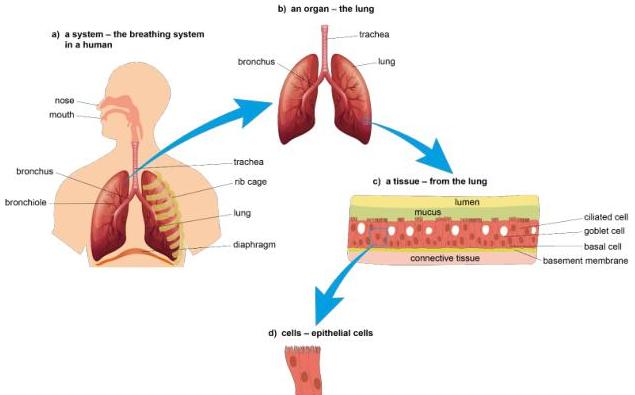
Multicellular organisms are structured into a hierarchy ranging from cells to entire organ systems. This page explores how cells undergo differentiation to become specialised, and how these cells group together into tissues, organs, and systems to perform life-sustaining functions. Understanding this hierarchy is essential for grasping how complex organisms operate.
Biological organisation is a hierarchical framework where specialised cells form tissues, tissues form organs, and organs collaborate within organ systems to perform complex physiological functions.
All living things are composed of one or more cells, which are the fundamental units of life. While unicellular organisms consist of a single cell, multicellular organisms are made of many cells that often become specialised to perform specific roles. Plant cells are generally larger than animal cells, but both follow a specific hierarchy of organisation.
Cell Differentiation and Specialisation
Most eukaryotic cells undergo a process called differentiation once they have finished dividing and growing. During differentiation, a cell develops distinct features, such as a specific shape or the ability to undertake unique chemical reactions in its cytoplasm, which allow it to perform a particular function. These are then known as specialised cells.
Examples of Specialised Animal Cells
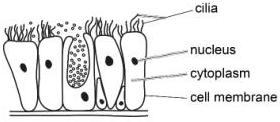
- Ciliated Cells: These cells possess hair-like projections called cilia. In humans, they line the trachea, where they move mucus to protect the lungs from infection and irritants.
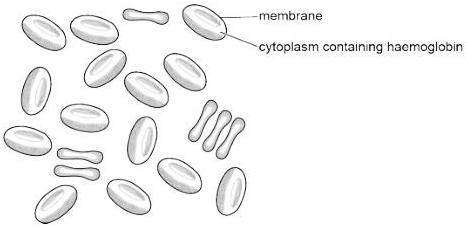
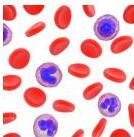
- Red Blood Cells: These are adapted for the transport of gases. In mammals, they lack a nucleus and chromosomal DNA to maximise space for haemoglobin, a molecule that binds to oxygen and carbon dioxide. Their biconcave shape provides a large surface area for gas absorption.
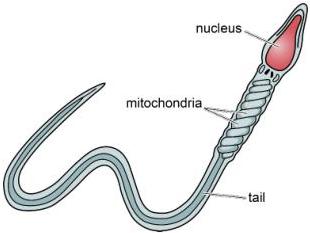
- Sperm Cells: These carry genetic information from the male. They have a tail for movement (swimming) and a mid-section packed with mitochondria to provide the energy required for this motion.
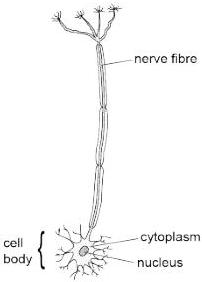
- Nerve Cells (Neurones): Often elongated, these cells are designed to conduct electrical impulses over long distances. Specific chemical reactions allow these impulses to travel along the fibre.
Examples of Specialised Plant Cells
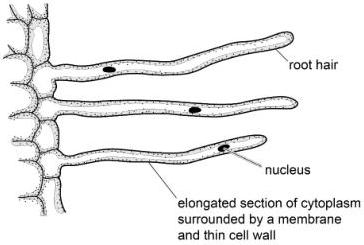
- Root Hair Cells: These have an elongated, hair-like structure that significantly increases the surface area for the absorption of water and mineral ions from the soil. They lack chloroplasts because they are not exposed to light.
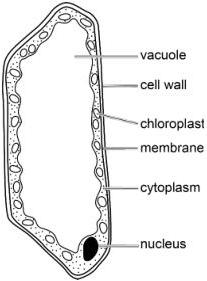
- Palisade Mesophyll Cells: These are columnar cells found in leaves. Their cytoplasm is packed with chloroplasts to absorb sunlight for photosynthesis.
Tissues
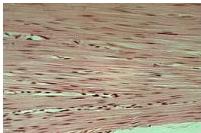
A tissue is defined as a group of one or a few different cell types that work together to perform a shared function. In animals, examples include muscle tissue, which is contractile and associated with the skeleton, and blood, which contains various cell types circulating to transport materials. In plants, examples include xylem vessels in the stem and the palisade mesophyll layer in a leaf.
Organs
An organ is a structure made of a group of different tissues working together to perform a specific function. For instance, the heart is an animal organ that pumps blood, while a leaf is a plant organ that harvests energy from sunlight.
Organ Systems
An organ system is a group of organs with related functions that work together to perform a body function.
In animals, notable organ systems include:
- Circulatory system: Comprising the heart, blood, and blood vessels.
- Digestive system: Including the stomach and small intestine.
- Excretory system: Including the kidneys and bladder.
- Nervous system: Including the brain and spinal cord.
- Reproductive system: Including the ovaries or testes.
- Respiratory system: Including the lungs and trachea.
- Skeletal system: Including the skull and other bones.
In plants, the shoot is an organ system made of the stem, leaves, and buds.
The Hierarchical Sequence
When ordering the levels of organisation from the smallest to the largest units in a multicellular organism, the sequence is as follows:
- Sub-cellular component (e.g. nucleus, mitochondria)
- Cell (the basic unit of life)
- Tissue (a group of cells with a shared function)
- Organ (a group of tissues with a specific function)
- Organ System (a group of organs with a body function)
- Organism (the whole living being)
Key takeaways
- Differentiation is the process by which cells become specialised with distinct shapes and functions.
- A tissue is a group of similar cells, while an organ is a collection of different tissues working together.
- The hierarchy of life follows the order: sub-cellular components, cells, tissues, organs, organ systems, and organisms.
- Specific adaptations, such as the lack of a nucleus in mammalian red blood cells, are key to a cell's specialised function.
When answering ESAT questions about levels of organisation, always check if the question asks for the order from smallest to largest or largest to smallest. Sub-cellular components are always the smallest unit in this hierarchy.
Do not confuse 'tissues' with 'organs'. A tissue is made of similar cells, whereas an organ is always a collection of different tissues working together for a broader purpose.
The elimination of the nucleus in mature mammalian red blood cells is a prime example of extreme specialisation. By sacrificing the ability to divide or repair themselves, these cells maximise their efficiency in oxygen transport, which is a critical requirement for the high metabolic rates of mammals.
Frequently asked questions
Why do root hair cells lack chloroplasts?
Root hair cells are located underground in the soil where there is no light. Since chloroplasts are used for photosynthesis, which requires light, they are not needed in these cells.
Is blood considered a tissue or an organ?
Blood is considered a tissue because it consists of a group of cells (red blood cells, white blood cells, and platelets) working together to perform shared functions, such as transport and protection.
What determines the sex of a human zygote?
The sex is determined by the sperm cell. If a sperm carrying a Y chromosome fertilises the egg, the zygote is male (XY). If a sperm carrying an X chromosome fertilises the egg, the zygote is female (XX).