Asexual and Sexual Reproduction
Updated July 2026
Reproduction is the fundamental biological process by which parents produce offspring to ensure the continuation of a species. This topic distinguishes between asexual reproduction, which relies on mitosis to create identical clones, and sexual reproduction, which utilizes meiosis and fertilisation to generate genetic variation in populations.
Asexual reproduction involves a single parent producing genetically identical offspring (clones), whereas sexual reproduction involves two parents and the fusion of haploid gametes to create genetically unique diploid offspring.
The Purpose of Reproduction
All living organisms reproduce to pass on genetic material from one generation to the next. This ensures the continuation of the species and prevents extinction. There are two primary modes of reproduction: asexual and sexual.
Asexual Reproduction
Asexual reproduction requires only one parent and involves no production or fusion of gametes. Because there is only one source of genetic material, the offspring are genetically identical to the parent and to each other. These identical organisms are known as clones.
Binary Fission in Bacteria
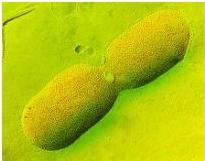
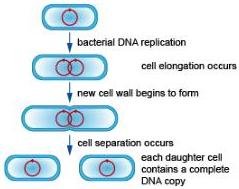
In unicellular organisms like bacteria, asexual reproduction occurs through a process called binary fission. A single bacterial cell, such as E. coli, divides into two new, genetically identical cells.
During this process, the cell produces a copy of its chromosomal DNA loop. The cell then divides, passing one copy of the DNA to each daughter cell.
Asexual Reproduction in Multicellular Organisms
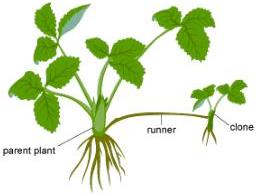
Many plants also reproduce asexually. For example, strawberry plants produce structures called runners. Along these runners, new offspring plants develop. The cells in the runner divide by mitosis and then differentiate into the various cell types required for a new plant. Consequently, the offspring are clones of the parent plant.
The Role of Mutations in Asexual Reproduction
While offspring in asexual reproduction are typically identical, variation can occur if a mutation happens during DNA replication. A mutation is a change in the sequence of bases in the DNA. If the DNA is not copied exactly, the two resulting cells will have slightly different genetic codes, meaning they are no longer perfect clones.
Sexual Reproduction
Sexual reproduction involves two parents and the fusion of specialised reproductive cells called gametes. In animals, these are the sperm and the egg (ovum). Gametes are produced through a specific type of cell division called meiosis, which halves the chromosome number.
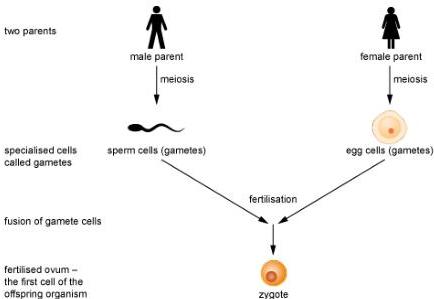
During fertilisation, the nuclei of the two haploid gametes fuse to form a single diploid cell called a zygote. This zygote then divides by mitosis to grow into a multicellular organism. Offspring produced this way are genetically different from their parents and their siblings for two reasons:
- They receive of their genetic information from each parent.
- The gametes produced by the parents are already genetically unique due to meiosis, and the specific pairing of gametes at fertilisation is random.
The Importance of Genetic Variation
Genetic variation is the range of different characteristics within a population. It is essential for natural selection, which allows populations to adapt to environmental changes. This variation also helps reduce the frequency of recessive inherited conditions.
Comparison of Reproduction Methods
| Characteristic | Asexual Reproduction | Sexual Reproduction |
|---|---|---|
| Number of parents needed | 1 | 2 |
| Requires meiosis | No | Yes |
| Offspring are clones | Yes (absent mutations) | No |
| Mutations create variation | Yes | Yes |
| Genetic variation in offspring | Low | High |
Key takeaways
- Asexual reproduction involves one parent and produces genetically identical clones through mitosis.
- Sexual reproduction involves two parents and produces genetically unique offspring through the fusion of gametes.
- Mutations are the only source of genetic variation in strictly asexual populations.
- Sexual reproduction is vital for natural selection as it maintains high levels of genetic variation within a species.
In ESAT questions, look closely at whether the organism is described as having one or two parents. If the question mentions 'clones' or 'runners', it is referring to asexual reproduction and mitosis. If it mentions 'gametes' or 'seeds', it is usually sexual reproduction and meiosis.
Do not assume that 'variation' only exists in sexual reproduction. While sexual reproduction creates extensive variation, asexual organisms can still vary through mutations, which is how antibiotic resistance often spreads in bacteria.
The trade-off between asexual and sexual reproduction is often speed versus adaptability. Asexual reproduction allows for rapid population growth in stable environments, while sexual reproduction provides the genetic diversity necessary to survive changing pressures like new diseases or climate shifts.
Frequently asked questions
Are offspring of asexual reproduction always identical to the parent?
Not necessarily. While they are intended to be clones, random mutations occurring during DNA replication can change the base sequence, leading to genetic differences.
Why does sexual reproduction require meiosis instead of mitosis?
Meiosis reduces the chromosome number by half (to the haploid state). This ensures that when two gametes fuse at fertilisation, the resulting zygote has the correct diploid number of chromosomes rather than doubling it every generation.
What is a zygote?
A zygote is the diploid cell formed by the fusion of two haploid gametes (sperm and egg) during fertilisation.