Group Chemistry of Alkali Metals Halogens and Noble Gases
Updated July 2026
This lesson covers the physical and chemical trends within Groups 1, 17, and 18 of the Periodic Table. Understanding these patterns is vital for the ESAT, as it explains why lithium reacts differently from potassium and why noble gases remain chemically inert.
The chemical and physical properties of elements within a group are determined by the number of electrons in their outermost shell, with metals and non-metals showing opposite reactivity trends as the groups are descended.
Introduction to Group Chemistry
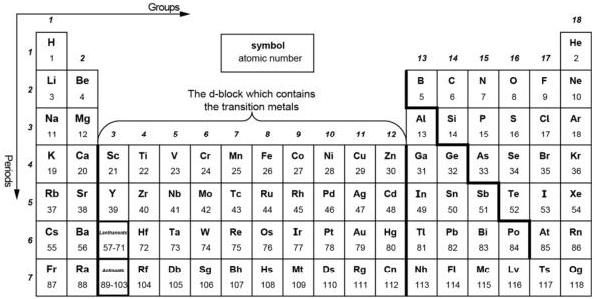
The Periodic Table is organised into vertical columns known as Groups. Elements within the same Group share the same number of electrons in their outermost shell, which leads to similar chemical behaviours. For the ESAT, you must be familiar with three specific groups: the alkali metals (Group 1), the halogens (Group 17), and the noble gases (Group 18).
The Alkali Metals (Group 1)
The Group 1 elements, including lithium (), sodium (), and potassium (), are known as the alkali metals. They all possess one electron in their outermost shell, which they readily lose to form ions. These metals are distinct from most other metals because they are soft enough to be cut with a knife and have relatively low densities, with lithium, sodium, and potassium all being less dense than water.
Trends and Reactions with Water
A key trend in Group 1 is that reactivity increases as you move down the group. This is clearly demonstrated by their reactions with cold water. In each case, a metal hydroxide and hydrogen gas are produced.
-
Lithium: This metal reacts relatively slowly with water. It floats on the surface but does not melt. It gradually dissolves into the water to form an alkaline solution of lithium hydroxide (). If ignited, the hydrogen produced burns with a crimson red flame.
-
Sodium: Sodium reacts more vigorously than lithium. It moves rapidly across the surface of the water, melting into a shiny silver ball due to the heat of the reaction. It quickly dissolves to form sodium hydroxide (). The hydrogen gas can burn with a yellow-orange flame.
-
Potassium: The reaction is extremely vigorous. Potassium moves very rapidly on the surface and melts. The reaction produces enough heat to self-ignite the hydrogen gas, which burns with a characteristic lilac flame. The resulting solution is potassium hydroxide ().
The Halogens (Group 17)
The elements in Group 17 are non-metals known as the halogens. They have seven electrons in their outermost shell and tend to gain one electron to form ions (, , , ). Unlike the alkali metals, the reactivity of the halogens decreases as you move down the group. This means fluorine is the most reactive, while iodine is significantly less reactive.
Physical Properties and States
Halogens exist as diatomic molecules, meaning they consist of two atoms bonded together, such as or . As you move down the group, the melting and boiling points increase, leading to a change in state at room temperature:
- Fluorine (): A pale yellow gas.
- Chlorine (): A pale green gas.
- Bromine (): A volatile red-brown liquid.
- Iodine (): A dark grey solid that sublimes into a purple vapour when heated.
Displacement Reactions
The reactivity trend can be proven through displacement reactions. A more reactive halogen will displace a less reactive halogen from an aqueous solution of its halide salt. For example, if chlorine gas is bubbled through a solution of potassium iodide, the more reactive chlorine displaces the iodine:
In this reaction, the solution would turn brown due to the formation of iodine.
The Noble Gases (Group 18)
Group 18 consists of the noble gases: helium (), neon (), argon (), krypton (), and xenon (). These elements are unique because they have a complete outermost shell of electrons. This configuration is exceptionally stable, making the noble gases chemically inert, meaning they do not readily react with other elements.
Characteristics of Group 18
Noble gases are all colourless, monoatomic gases at room temperature. Because they do not form molecules or metallic lattices, they have very low boiling points. However, like the halogens, their boiling points increase as you move down the group because the atoms become larger and have more electrons, leading to stronger (though still weak) intermolecular forces.
Key takeaways
- Reactivity in Group 1 (alkali metals) increases as the group is descended.
- Reactivity in Group 17 (halogens) decreases as the group is descended.
- Group 1 metals react with water to produce a metal hydroxide and hydrogen gas.
- Halogens exist as diatomic molecules () and show a trend from gas to solid down the group.
- Group 18 noble gases are chemically inert due to their full outer shells of electrons.
When answering ESAT questions on group trends, always double check if the element is a metal or a non-metal. Remember that reactivity increases down a metal group but decreases down a non-metal group.
Do not confuse the flame colours of the Group 1 metal reactions. Lithium is crimson red, sodium is yellow-orange, and potassium is lilac. These are frequently tested identifiers.
The reactivity trends are explained by the distance between the nucleus and the outer electrons. In Group 1, larger atoms lose their outer electron more easily because it is further from the nucleus. In Group 17, smaller atoms attract an incoming electron more strongly because the nucleus is closer to the outer shell.
Frequently asked questions
Why does potassium ignite spontaneously in water but lithium does not?
Potassium is lower in Group 1 than lithium, so it is more reactive. Its reaction with water releases heat much more rapidly, reaching the ignition temperature of the hydrogen gas produced almost immediately, resulting in a lilac flame.
What is the result of adding bromine water to a solution of sodium chloride?
No reaction will occur. Bromine is lower in Group 17 than chlorine and is therefore less reactive. It cannot displace the more reactive chlorine from the sodium chloride salt.
Why do the boiling points of noble gases increase as you go down Group 18?
As you move down the group, the atoms have more electrons and a larger surface area. This leads to stronger temporary dipoles and increased intermolecular forces, requiring more energy to overcome and resulting in higher boiling points.
Which halogen is a liquid at room temperature?
Bromine () is the only halogen, and one of only two elements in the periodic table, that is a liquid at standard room temperature and pressure.