Reactivity and Extraction of Metals for the ESAT
Updated July 2026
This page explains how the reactivity of metals is determined by their tendency to form positive ions. You will learn how this reactivity governs the reactivity series and dictates whether a metal is extracted using electrolysis, reduction with carbon, or found as a native element in the Earth's crust.
The reactivity of a metal is a measure of its tendency to lose electrons and form positive ions (cations). This reactivity directly determines the stability of the metal's compounds and the energy required for its extraction.
Reactivity and the Formation of Positive Ions
In chemistry, the reactivity of a metal is defined by how easily it can lose its outer shell electrons to form a positive ion, also known as a cation. Metals react by undergoing oxidation, which is the loss of electrons. For example, when an aluminium atom reacts, it loses its three outer electrons to achieve a stable noble gas electron configuration, forming an ion.
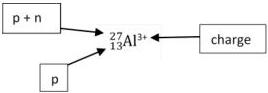
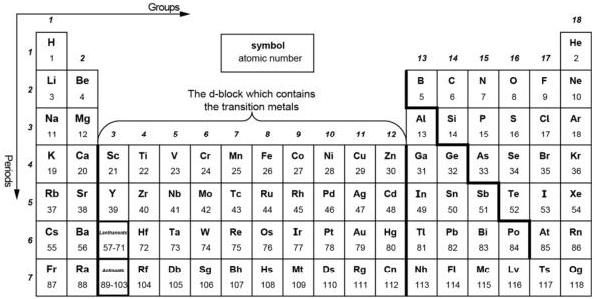
This tendency to form ions is influenced by the atomic structure and the position of the metal in the Periodic Table. Elements in Group 1, the alkali metals, have a very high tendency to form ions because they only need to lose a single electron. As you move down a group, the outermost electron is further from the nucleus and is more shielded by inner electron shells. This reduces the electrostatic attraction between the nucleus and the outer electron, making it easier to remove and thus increasing the metal's reactivity.
The Reactivity Series and Displacement
Metals can be arranged in a reactivity series based on their ability to form positive ions. A metal that is higher in the series is more reactive and will more readily lose electrons than a metal lower in the series.
A common way to demonstrate this is through displacement reactions. A displacement reaction occurs when a more reactive metal takes the place of a less reactive metal in a compound. This happens because the more reactive metal has a greater tendency to exist as an ion.
Consider the reaction between zinc and copper(II) sulfate:
In this reaction, the zinc atoms lose electrons to become ions (oxidation), while the copper ions gain electrons to become copper atoms (reduction). The ionic equation highlights the transfer of electrons:
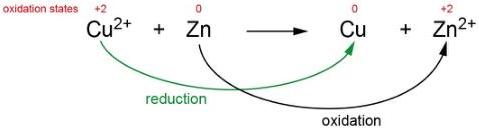
Because zinc can displace copper, we conclude that zinc is more reactive and has a higher tendency to form positive ions than copper.
Reactivity and Metal Extraction
Most metals are found in the Earth's crust as compounds within rocks called ores. To obtain the pure metal, it must be extracted from the ore. The method used for extraction is determined by the metal's reactivity. The more reactive a metal is, the more stable the compound it forms, and the more difficult it is to separate the metal from other elements.
-
Electrolysis: Metals that are more reactive than carbon, such as potassium, sodium, calcium, magnesium, and aluminium, form very stable oxides. These cannot be reduced by carbon. Instead, they must be extracted using electrolysis of their molten compounds. This is an energy intensive and expensive process that uses electricity to force the positive metal ions to gain electrons at the negative electrode.
-
Reduction with Carbon: Metals that are less reactive than carbon, such as zinc, iron, and lead, can be extracted by heating their oxides with carbon or carbon monoxide. The carbon acts as a reducing agent, meaning it removes oxygen from the metal oxide. For example, in a blast furnace, iron(III) oxide is reduced by carbon monoxide to produce liquid iron:
- Native Metals: Metals with very low reactivity, such as gold and platinum, do not easily form compounds with other elements. They are often found in the Earth's crust in their native state as pure metals. These require only physical separation from the surrounding rock and no chemical reduction is needed.
Key takeaways
- Reactivity measures a metal's tendency to lose electrons and form a positive ion.
- A more reactive metal will always displace a less reactive metal from its aqueous ionic compound.
- Metals above carbon in the reactivity series require electrolysis for extraction.
- Metals below carbon can be extracted by chemical reduction using carbon or carbon monoxide.
- The most unreactive metals, like gold, are found uncombined in nature as native metals.
When answering ESAT questions on extraction, always check if the metal is above or below carbon in the reactivity series. If it is above carbon, like aluminium, reduction with carbon is impossible and you must select electrolysis as the extraction method.
Do not confuse the reactivity of a metal with its physical properties like density or melting point. For example, tungsten has a very high melting point but is less reactive than many metals with much lower melting points.
The reactivity of a metal is fundamentally linked to its first ionisation energy. Metals with low ionisation energies are highly reactive because they require very little energy to remove the outermost electron to initiate a chemical reaction.
Frequently asked questions
Why is carbon included in the reactivity series of metals?
Carbon is a non-metal, but it is included in the series as a reference point. It allows chemists to predict whether a metal can be extracted from its oxide using carbon reduction or if it requires the more expensive process of electrolysis.
What is the link between a metal's ion charge and its reactivity?
Generally, metals that only need to lose one electron (Group 1) are more reactive than those needing to lose two (Group 2) or three (Group 13), provided they are in the same period. This is because less energy is required to remove one electron than multiple electrons.
Why does the reactivity of metals increase as you move down a group?
As you move down a group, the number of electron shells increases. The outer electrons are further from the nucleus and experience more shielding from inner shells, which weakens the nuclear attraction and makes it easier for the atom to lose electrons and form an ion.
Is hydrogen also part of the reactivity series?
Yes, hydrogen is often included as a reference. Metals below hydrogen in the series, such as copper, silver, and gold, will not react with dilute acids to produce hydrogen gas.