Genome Chromosomes and Protein Synthesis for the ESAT
Updated July 2026
This guide covers the storage and expression of genetic material. It explains how the genome is organised into chromosomes and genes, the mechanism by which base triplets determine polypeptide sequences, and how mutations can alter protein function or remain silent. Understanding these molecular foundations is critical for ESAT Biology questions.
The genome is the complete set of DNA within an organism, structured as chromosomes that contain genes. Each gene uses a sequence of nucleotide triplets to code for specific amino acids, which form polypeptides that fold into unique three dimensional shapes to become functional proteins.
Chromosomes and Genes
In the nucleus of a cell, DNA is stored in the form of long, thread-like structures known as chromosomes. These structures are generally only visible when a cell is undergoing division. During most of the cell cycle, a chromosome consists of a single DNA molecule. However, just before cell division occurs, this DNA molecule is copied. This results in a chromosome made of two identical DNA molecules, which are often seen as an X shape.
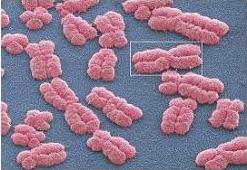
As shown in the image above, the DNA double helix is wrapped around proteins to allow it to be packaged tightly within the nucleus. This replication process ensures that when the cell divides, one copy of each DNA molecule can be passed to each daughter cell.
A DNA molecule is extremely large, consisting of many millions of bases. It is divided into shorter sections called genes. A gene is a specific section of a chromosome that stores the information needed to make a protein.
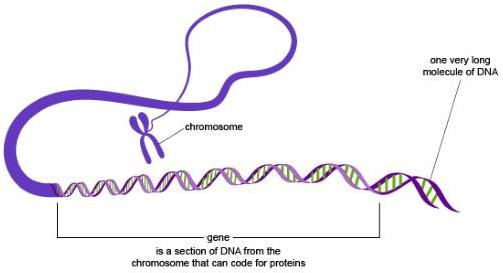
DNA serves as the genetic material, storing information in a format known as the genetic code. Because genes store the instructions for building proteins, we say that genes code for proteins.
Protein Synthesis and the Genetic Code
Proteins are large molecules classified as polymers. They are composed of long chains of smaller, similar molecules called amino acids. Every amino acid contains the elements carbon, hydrogen, oxygen, and nitrogen. The process of building these protein chains from individual amino acids is called protein synthesis.
The cell treats the genetic information in a single gene as a set of instructions to construct one specific protein.
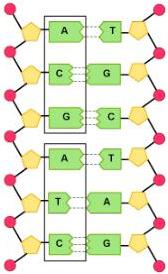
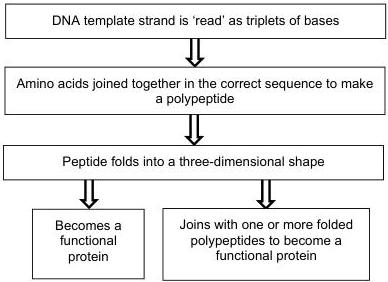
As seen in the diagram of a gene section, DNA is double-stranded. However, the cell only uses the sequence of bases on one of these strands (the template strand) to produce a protein. The code is read in groups of three bases called triplets. Each triplet codes for one specific amino acid in the final protein. By reading these triplets in order, the cell ensures that amino acids are joined in the correct sequence.
Worked Example: Using the Genetic Code
Consider a section of a gene with the following base sequence:
TCAAGGGAGGTCTCG
To understand how this codes for a protein, we first separate the bases into triplets:
TCA, AGG, GAG, GTC, TCG

Each triplet corresponds to a specific amino acid. For example, if TCA codes for a specific amino acid (represented here as a circle), then the sequence of triplets ensures the resulting polypeptide chain follows the same order. Note that the genetic code is redundant: different triplets can code for the same amino acid. In this example, both TCA and TCG code for the same amino acid (the circle).
Exercise 20: Structural Hierarchy
a. Arrange the following terms from smallest to largest: base, DNA molecule, gene, nucleotide, triplet.
b. Describe a triplet and its function.
Solutions to Exercise 20:
a. The correct order is: base, nucleotide, triplet, gene, DNA molecule. A base is a component of a nucleotide. Three nucleotides in a chain form a triplet. A gene consists of many triplets. A DNA molecule contains many genes.
b. A triplet is a set of three bases. Its function is to code for one specific amino acid, acting as part of the template for protein synthesis.
Protein Structure and Folding
Protein synthesis involves creating chains of amino acids called polypeptides. A functional protein may consist of a single polypeptide or multiple polypeptide chains working together.
Functional Protein Examples
- Amylase: Consists of 1 polypeptide (approximately 496 amino acids). It digests starch into simple sugars.
- Insulin: Consists of two chains (A chain with 21 amino acids, B chain with 30 amino acids). It regulates blood glucose levels.
- Haemoglobin: Consists of four chains (two alpha chains of 141 amino acids and two beta chains of 146 amino acids) and four haem groups. It transports oxygen in the blood.
- Collagen: Consists of three alpha chains (each approximately 1000 amino acids) twisted into a triple helix for structural support.

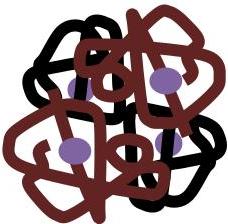
The Importance of Folding
The sequence of amino acids in a polypeptide determines its three dimensional shape. One primary driver of folding is the interaction with water: some amino acids are attracted to water (hydrophilic), while others are repelled (hydrophobic).
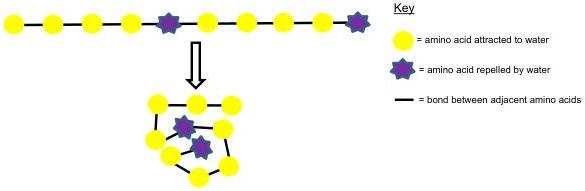
In a watery environment like the cytoplasm, the polypeptide folds so that water-repelling amino acids are tucked inside, while water-attracting ones are on the exterior. This specific folding creates the functional shape, such as the active site of an enzyme.
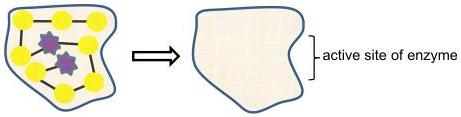
If the sequence of amino acids changes, the folding will differ, leading to a different three dimensional shape and potentially a loss of function.
Gene Mutations
A gene mutation is a change in the nucleotide sequence of the DNA. Because the sequence of bases determines the sequence of amino acids, a mutation can change a triplet, leading to a different amino acid being placed in the polypeptide.
Effects of Mutations
- No Effect: Many mutations occur in large sections of non-coding DNA between genes. Additionally, 'silent mutations' can occur within a gene if the new triplet still codes for the same amino acid.
- Small Effect: Some mutations cause minor changes. For example, polydactyly in cats (extra toes) is a phenotype change resulting from a mutation, but the effect on the animal's overall function is small.
- Determining the Phenotype: Occasionally, a mutation can entirely change a characteristic. For instance, if a mutation affects a gene coding for an enzyme responsible for flower pigment, the enzyme may become non-functional. The active site may no longer be complementary to the substrate, preventing the pigment from being produced and changing the flower's appearance.


Exercise 21: Analysing a Mutation
A gene section has the sequence: TCA AGG GAG TTC GTC TCG. It is copied incorrectly as: TCA AGG GAG TTA GTC TCG.
a. State the change in the sequence.
b. Using the triplets (TTC = phenylalanine, TTA = leucine), explain the potential effect on the gene's function.
c. If this gene codes for an enzyme, explain the implications.
Solutions to Exercise 21:
a. A single base C changed to A, resulting in the triplet TTC changing to TTA.
b. The mutation causes leucine to be added to the polypeptide instead of phenylalanine. This change in amino acid sequence can alter the folding and structural integrity of the protein.
c. The change could alter the shape of the enzyme's active site, making it no longer complementary to the substrate. Consequently, the enzyme would become non-functional.
Key takeaways
- The genome constitutes the total genetic material of an organism, which is packaged into chromosomes within the cell nucleus.
- Genes are specific DNA segments that code for proteins by using sequences of three bases (triplets) to represent specific amino acids.
- A protein's functional three dimensional shape is entirely determined by its amino acid sequence and how it interacts with its environment.
- Mutations are changes in the DNA base sequence that may be silent, have minor effects, or significantly alter phenotypes by changing protein structure.
When answering ESAT questions about the size of genetic structures, remember that a nucleotide is the building block of DNA. Three nucleotides make a triplet, many triplets make a gene, many genes are on one DNA molecule, and a chromosome (at division) contains two DNA molecules.
Be careful not to say that mutations 'kill' enzymes. Enzymes are not alive; they are molecules. Instead, use the term 'denatured' if the shape is destroyed by external factors, or 'non-functional' if a mutation prevents the correct shape from forming.
The attraction and repulsion of amino acids to water (hydrophobicity) is a major force in protein folding. This explains why proteins in the blood (a watery environment) have a different structural logic than proteins embedded in oily cell membranes.
Frequently asked questions
Are chromosomes always visible under a microscope?
No. Chromosomes are generally only visible as distinct, thread-like structures when a cell is actively dividing. During the rest of the cell cycle, the DNA is less condensed.
What is the difference between a polypeptide and a functional protein?
A polypeptide is a simple chain of amino acids. A functional protein is the final structure after one or more polypeptides have folded into a specific three dimensional shape.
How can a mutation result in no change to the phenotype?
A mutation might occur in a non-coding region of the DNA, or it might be a 'silent mutation' where the changed DNA triplet still codes for the same amino acid due to the redundancy of the genetic code.
Why is the sequence of amino acids so important for enzyme function?
The sequence determines how the protein folds. For enzymes, this folding creates the active site. If the sequence changes, the active site shape may change, preventing the substrate from fitting.