Mechanism of Enzyme Action and Specificity
Updated July 2026
Enzymes are biological catalysts, primarily proteins, that speed up metabolic reactions by providing a specific active site for substrates. This page explores the lock and key hypothesis and the induced fit theory, explaining why enzyme specificity is vital for biological processes such as digestion and respiration.
Enzymes are protein catalysts with a unique three-dimensional active site that is complementary to a specific substrate. This specificity, explained by the lock and key and induced fit models, allows enzymes to facilitate chemical reactions without being consumed in the process.
Metabolic processes in cells are driven by chemical reactions. These reactions require a catalyst to speed them up because, without such assistance, they would occur too slowly to sustain life. In biological systems, these catalysts are known as enzymes. Almost all metabolic pathways, including respiration, protein synthesis, photosynthesis, and digestion, are controlled by enzymes. The specific enzymes present within a cell determine which metabolic pathways can occur at any given time.
The Structure of the Active Site
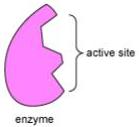
Enzymes are primarily proteins. Their function is dictated by their structure. Every enzyme contains a specific area with a unique three-dimensional shape known as the active site. This is the precise location where the chemical reactions take place.
Enzyme Specificity and the Lock and Key Hypothesis
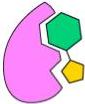
Enzymes are highly specific, meaning they only react with their particular substrate. A substrate might be a specific molecule, such as starch, or a type of molecule, such as a protein. This specificity is often explained using the lock and key hypothesis. In this model, the active site of the enzyme has a unique three-dimensional shape. Only a substrate with a complementary shape can fit into the active site, much like a specific key fits into a particular lock. For example, starch binds with the enzyme amylase, while proteins bind with proteases.

The Mechanism of Reaction
Enzymes function by converting substrate molecules into different molecules known as products. When a substrate binds to the active site of an enzyme, they form an intermediate structure called an enzyme substrate complex (ESC).





During the reaction, the enzyme remains unchanged and is not used up. This means a single enzyme molecule can be reused many times. Depending on the specific reaction, an enzyme may act on one substrate to form two products, or it may join two separate substrates together to form a single product.


Substrates can be broken down or built up through specific chemical processes. A hydrolysis reaction involves breaking a substrate by adding water. Conversely, a condensation reaction forms a product by removing water.
Induced Fit Theory
A more refined understanding of enzyme action is provided by the induced fit theory. This theory suggests that while the active site is a specific shape, it is not entirely rigid. When the correct substrate enters the active site, the enzyme changes its shape slightly. This allows the active site to fit more closely around the substrate, helping the reaction to take place more efficiently.
Worked Examples
Exercise 26
Question: Why are catalysts necessary in order for reactions to take place in organisms?
Answer: Catalysts are necessary because metabolic reactions would otherwise occur too slowly. Enzymes speed up these reactions to a rate that is fast enough to sustain life.
Exercise 27
Question: Some enzymes were mixed with a substrate as shown in the diagram below.

Explain why only enzyme Y catalyses the reaction with this substrate.
Answer: Enzyme Y is the only one with an active site shape that is complementary to the shape of the substrate. Because enzymes are specific, the substrate will only fit into and react with the enzyme that matches its three-dimensional structure.
Key takeaways
- Enzymes are biological catalysts that speed up metabolic reactions without being consumed.
- The active site is a region on the enzyme with a unique three-dimensional shape where the substrate binds.
- The lock and key hypothesis describes the complementary fit between a specific substrate and an enzyme's active site.
- The induced fit theory explains that the active site can change shape slightly to bind a substrate more effectively.
- Enzymes can facilitate both the breakdown of molecules (hydrolysis) and the synthesis of molecules (condensation).
When answering ESAT questions on enzyme action, always use the term 'complementary' rather than 'matching' to describe the relationship between the substrate and the active site.
Avoid the misconception that enzymes are 'used up' in a reaction. They are catalysts and can be reused multiple times until they are eventually degraded or denatured.
The specificity of enzymes is the reason why a single mutation in a gene can have a massive impact on health. If the DNA sequence changes, the resulting amino acid sequence might alter the 3D shape of the active site, making the enzyme non-functional.
Frequently asked questions
What happens to an enzyme after a reaction is complete?
The enzyme remains chemically unchanged and is released from the products. It is then free to bind with another substrate molecule and repeat the process.
What is an enzyme-substrate complex?
It is the temporary intermediate structure formed when a substrate molecule binds to the active site of an enzyme.
How does the induced fit model differ from the lock and key model?
The lock and key model suggests a rigid, perfect match between the substrate and active site. The induced fit model suggests the active site is flexible and molds itself around the substrate for a tighter fit.