The Nucleus and Genetic Material in Eukaryotic Cells
Updated July 2026
The nucleus acts as the control centre of eukaryotic cells by housing genetic material in the form of DNA. For the ESAT, you must understand how this DNA is organised into chromosomes and how genes act as functional coding units for proteins. This section covers chromosomal structure and the categorisation of autosomes.
In eukaryotic organisms, the nucleus contains the genome stored as long, thread-like structures called linear chromosomes. These chromosomes are composed of DNA molecules wrapped around proteins, with functional segments called genes coding for specific proteins.
The Nucleus and Chromosomes
Most animal and plant cells possess a nucleus which acts as the control centre for the cell's activities. The nucleus contains the genetic material, or DNA, which is stored in the form of linear chromosomes. A chromosome is defined as a long, thread-like structure made of DNA that is wrapped tightly around packaging proteins to fit within the nuclear space.
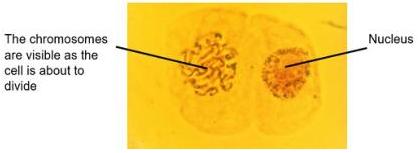
In human cells, there are pairs of chromosomes. These pairs are divided into two distinct groups:
- Sex chromosomes: One pair of chromosomes that determines the biological sex of the individual.
- Autosomes: The remaining pairs of chromosomes. Autosomes are defined as any chromosomes that are not sex chromosomes.
Genes and Characteristics
A chromosome contains many different functional units called genes. A gene is a short section of a chromosome that carries the specific genetic information required to code for the production of one protein. Because proteins are responsible for the various functions and structures of an organism, genes determine its inherited characteristics. For instance, specific genes code for traits such as human hair colour or the shape and colour of pea pods in plants.

Worked Examples
Exercise 13: Cells Lacking Nuclei
Question: Which type of human cell has no nucleus and therefore no chromosomes?
Answer: Mature red blood cells are a specific type of human cell that lacks a nucleus and chromosomes. During the process of differentiation, these cells eliminate their nucleus to maximise the space available for haemoglobin, which is the pigmented molecule required for the transport of oxygen and carbon dioxide around the body. Because they lack a nucleus, they cannot divide or produce new proteins once mature.
Summary of Genetic Storage
The relationship between these structures can be viewed hierarchically. The nucleus contains the genome, which is divided into multiple chromosomes. Each chromosome is a single long molecule of DNA, and each DNA molecule contains many individual genes. This organised storage ensures that genetic information is correctly regulated and passed on during processes like cell division.
Key takeaways
- The nucleus is the primary site of genetic material in both animal and plant eukaryotic cells.
- DNA is organised into linear chromosomes, which are made of DNA molecules wrapped around packaging proteins.
- Humans possess chromosomes in total, consisting of pairs of autosomes and pair of sex chromosomes.
- A gene is a specific section of a chromosome that contains the code for a single protein.
When answering ESAT questions, ensure you distinguish between the 'genome' (the total set of genetic material) and a 'gene' (a specific section of DNA). Also, remember that eukaryotic DNA is specifically described as 'linear' to distinguish it from the circular DNA found in prokaryotes.
Do not confuse the number of chromosomes with the number of pairs. Humans have chromosomes, which constitutes pairs. Mixing these numbers up is a common error in exam conditions.
The elimination of the nucleus in red blood cells is an excellent example of how cell structure is adapted to function. By sacrificing its genetic material and the ability to repair itself, the red blood cell becomes a more efficient vessel for gas exchange.
Frequently asked questions
What is the difference between an autosome and a sex chromosome?
Autosomes are the pairs of chromosomes that contain genes for general body characteristics and are not involved in sex determination. Sex chromosomes are the single pair (XX in females, XY in males) that specifically determine the biological sex of the organism.
How are chromosomes structured within the nucleus?
Each chromosome consists of a long, double-stranded DNA molecule that is wrapped around proteins. This wrapping allows several metres of DNA to be condensed into the microscopic space of the nucleus.
Does every cell in the human body contain a nucleus?
No. While most eukaryotic cells have a nucleus, mature red blood cells in mammals are a notable exception as they lose their nucleus to provide more space for oxygen transport.
What is the functional role of a gene?
A gene acts as a template or code for the synthesis of a specific protein. These proteins then go on to determine the physical and physiological characteristics of the organism.