Genetic Engineering and Recombinant DNA for the ESAT
Updated July 2026
Learn the biological mechanisms of genetic engineering, including the use of restriction enzymes and ligases to create recombinant DNA. This page covers the production of genetically modified organisms across bacteria and plants, alongside a detailed evaluation of the benefits and ethical risks of medical applications like gene therapy.
Genetic engineering is the process of transferring a specific gene from the DNA of one organism into the DNA of another to create a transgenic or genetically modified organism (GMO). It utilizes restriction enzymes to cut DNA at specific sites and ligases to join DNA fragments together, enabling the recipient to produce new proteins.
Introduction to Genetic Engineering
Genetic engineering involves the identification, isolation, and transfer of a specific gene from one organism into the genome of another. The resulting organism is known as a genetically modified organism (GMO) or a transgenic organism. This technology allows for the introduction of desirable traits that may not exist naturally within a species.
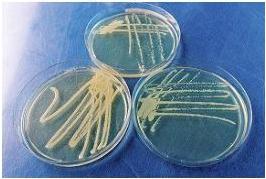
The earliest successful applications of this technology occurred in bacteria. Scientists created strains resistant to antibiotics, such as kanamycin, by inserting a resistance gene into the bacterial genome, allowing the cells to survive in environments that would otherwise be lethal.
The Molecular Process of Genetic Engineering
To create a GMO, several specific steps must be followed using molecular 'scissors' and 'glue' known as enzymes. This process is summarized through the example of bacterial modification:
- Isolation of the gene: A useful gene (the gene of interest) is cut from the donor DNA using a restriction enzyme. This enzyme breaks the chemical bonds between nucleotides at specific sequences.
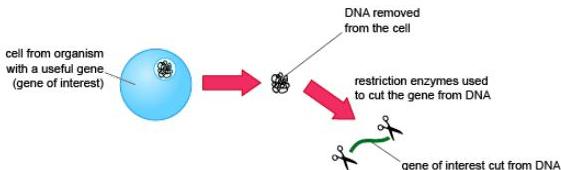
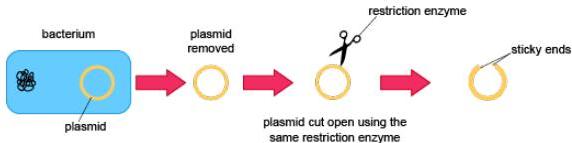
- Creation of sticky ends: Restriction enzymes typically cut the DNA in a staggered manner. This leaves short, single-stranded sections of DNA at each end of the gene, known as sticky ends.

- Preparation of the vector: In bacteria, a small, circular piece of DNA called a plasmid is used as a vector. The bacterial plasmid is cut open using the same restriction enzyme used in step 1, ensuring that the plasmid has complementary sticky ends to the gene of interest.
- Annealing: The isolated gene and the cut plasmid are mixed together. Because their sticky ends are complementary, hydrogen bonds form between the matching base pairs.
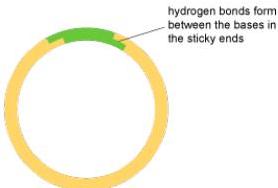
- Ligation: The enzyme DNA ligase is used to permanently join the two sections of DNA. Ligase acts as a molecular glue, forming strong covalent bonds between the end nucleotides of the gene and the plasmid. The result is a recombinant plasmid.
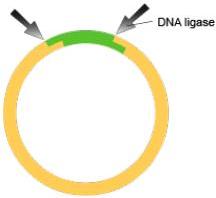
- Transformation: The recombinant plasmid is inserted back into a bacterial cell. The plasmid serves as a vector, transporting the new genetic material into the host cell.
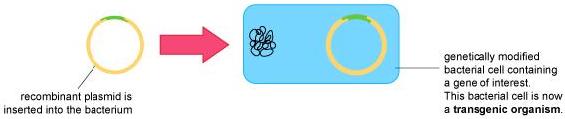
- Cloning and Expression: The modified bacteria are cultured (cloned) to produce large populations. These cells then use the inserted gene to synthesize the desired protein.
Genetic Engineering in Different Cell Types
Bacteria
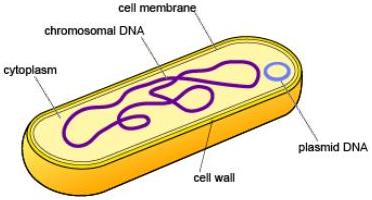
Bacteria are highly useful as GMOs due to their simple structure and rapid reproduction. They naturally contain plasmids that are easy to manipulate. Common proteins produced by GM bacteria include hormones like insulin, antibiotics like penicillin, enzymes such as rennin for cheese making, and blood clotting factors like Factor .
Plants
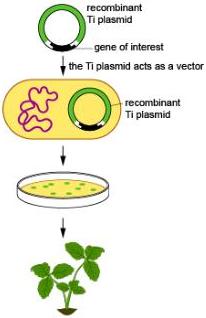
Plant cells do not contain plasmids, so different techniques are required. A common method uses the bacterium Agrobacterium tumefaciens, which contains a Ti plasmid. This plasmid naturally inserts part of its DNA into a plant's genome when the bacterium infects the plant.
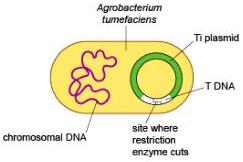
By inserting a useful gene into the Ti plasmid, scientists use the bacterium as a vehicle to deliver the gene into plant chromosomes. The modified plant cells are then grown in laboratory cultures to develop into mature, transgenic plants.
Benefits and Risks in Medical Applications
Genetic engineering offers transformative potential in medicine, but it also carries significant risks and ethical considerations.
Production of Medicines and Vaccines
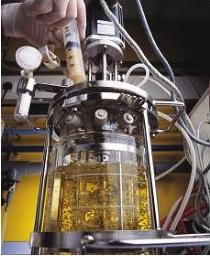
GM organisms can produce human proteins in large quantities, such as insulin for diabetes or antibodies in fermentation units. Because these are human proteins, side effects are minimized. Additionally, GMOs contribute to vaccine development, such as the Hepatitis B vaccine produced by GM yeast. However, some argue that the long term consequences of consuming or using GMO products remain unknown.
Xenotransplantation and Disease Control
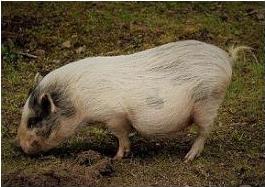
Scientists are developing GM pigs with organs that appear 'human-like' to the immune system, potentially solving the shortage of donor organs. Risks include the potential spread of animal diseases to humans and ethical objections to using animals in this way.
In public health, GM mosquitoes have been engineered with improved immune responses to malaria. When these mosquitoes breed with wild populations, they pass on genes that prevent the malarial parasite from surviving, potentially eradicating the disease.
Gene Therapy
Gene therapy involves inserting a functional human gene into a patient's cells to treat genetic disorders like cystic fibrosis. There are three primary targets:
- Body cells: Targeting specific organs (e.g. lungs) to reduce symptoms. This improves quality of life but is not a permanent cure for the whole body.
- Stem cells: Modifying bone marrow stem cells to treat conditions like sickle cell anaemia. This provides a long term cure and avoids donor rejection.
- Gamete cells: Modifying sperm or eggs. This is currently illegal in the UK because changes would be inherited by all future generations, risking unpredictable long term outcomes.
A significant risk in gene therapy is that the therapeutic gene might be inserted into the wrong position in a chromosome. If it is placed near a cancer-causing gene, it could switch that gene on, causing a tumour to develop.
Exercise 22
a) What do the letters GMO stand for? b) With reference to their structure, explain why bacteria are useful as GMOs. c) State two uses of a restriction enzyme in the process of genetic engineering. d) Name one other enzyme associated with genetic engineering and state its use in the process.
Solutions to Exercise 22
a) Genetically Modified Organism. b) Bacteria contain plasmids, which are circular DNA pieces that are easily removed, modified, and re-inserted. They also reproduce rapidly, allowing for the fast production of proteins. c) i) Cutting a specific gene out of a donor's DNA. ii) Cutting open a bacterial plasmid to create matching sticky ends. d) DNA Ligase. It is used to join the gene of interest to the plasmid DNA by forming chemical bonds between nucleotides.
Key takeaways
- Restriction enzymes cut DNA at specific sequences, often leaving 'sticky ends' for complementary base pairing.
- DNA ligase acts as a molecular glue to join donor genes and vector DNA into a single recombinant molecule.
- Plasmids and viruses serve as vectors to transport recombinant DNA into a host cell, such as a bacterium or plant cell.
- Gene therapy carries a risk of cancer if the new gene is inserted incorrectly, leading to the accidental activation of oncogenes.
- Genetic engineering allows for the mass production of human proteins like insulin and Factor with high purity.
When describing the process of genetic engineering, always mention that the SAME restriction enzyme must be used to cut both the gene of interest and the plasmid to ensure the sticky ends are complementary.
Do not confuse the roles of the enzymes: restriction enzymes 'cut' and ligase 'joins'. Also, remember that while gene therapy can treat symptoms in body cells, only stem cell or gamete therapy has the potential for a permanent effect on the cell population.
The use of GMOs in medicine often mirrors natural processes: for instance, using Agrobacterium or viruses as vectors exploits their natural 'lifestyle' of invading host genomes, repurposed for human benefit.
Frequently asked questions
What is the difference between a restriction enzyme and a ligase?
A restriction enzyme is used to cut DNA into fragments at specific sequences, creating 'sticky ends'. DNA ligase is used to join these DNA fragments together by forming covalent bonds between the sugar-phosphate backbones.
Why are 'sticky ends' important in genetic engineering?
Sticky ends are short sections of single-stranded DNA. They are important because they allow a donor gene and a vector (like a plasmid) to join together through complementary base pairing, ensuring the gene is inserted in the correct orientation.
Why is gene therapy on gamete cells currently illegal in the UK?
Modifying gamete cells (sperm or eggs) means the genetic changes will be present in every cell of the offspring and will be passed down to future generations. The potential for unpredictable, permanent side effects that could affect many organs makes this ethically and medically high-risk.
How does Agrobacterium tumefaciens help in plant genetic engineering?
It contains a Ti plasmid that naturally migrates into plant cells and integrates its DNA into the plant genome. Scientists replace the harmful parts of the Ti plasmid with a useful gene, using the bacterium as a natural delivery system.