Selective Breeding and Its Impact on Populations
Updated July 2026
Selective breeding is the process where humans choose organisms with desirable traits to produce offspring with those same characteristics over multiple generations. It is essential for agriculture and domestication but carries risks, such as reduced genetic variation and increased susceptibility to inherited diseases. Understanding its mechanics and consequences is vital for the ESAT Biology section.
Selective breeding is the artificial selection of individuals with specific inherited characteristics to breed together, aiming to increase the prevalence of those desirable traits in a population over successive generations.
Domesticated Animals and Selective Breeding
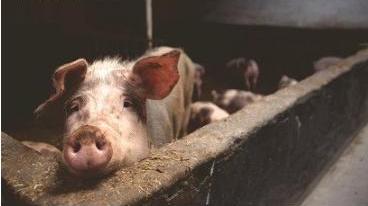
Domesticated animals are species that humans have tamed for various purposes, including food production, work, or as companions. These animals often rely on humans for their survival. For thousands of years, humans have employed selective breeding to enhance the quality and utility of these species.
The Systematic Process of Selective Breeding
Selective breeding is a deliberate and repetitive process. It relies on the fact that if a characteristic is controlled by genes, those genes can be passed from parents to offspring. The procedure follows a specific sequence:
- Humans identify and select individuals from a population that display desirable characteristics, such as a high growth rate or a calm temperament.
- These selected individuals are bred together.
- From the resulting offspring, the individuals that most strongly exhibit the desired characteristics are selected.
- These chosen offspring are then bred together.
- This cycle is repeated over many successive generations.
Over time, the frequency of the desirable characteristic increases within the population, resulting in a group of organisms that consistently display the chosen trait.
Selective Breeding in Dogs
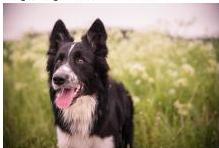
Modern dog breeds provide a clear example of selective breeding. All dogs originated from wolves. Humans selectively bred wolves that showed desirable traits, such as tameness. By selecting for different characteristics over time, humans have produced vastly different breeds. For example, the border collie was bred specifically for its high intelligence and obedience, while other breeds might be selected for physical traits like the flat face of a bulldog or the speed of a greyhound.
Comparison Between Natural Selection and Selective Breeding
While both processes result in changes to the inherited characteristics of a population over time, they differ in their drivers and objectives.
Similarities:
- Both processes require existing genetic variation within a population to work from.
- Both involve the inheritance of characteristics through the transfer of alleles from parents to offspring.
- Both lead to a change in the frequency of certain traits within a population over several generations.
Differences:
- Selection Pressure: In natural selection, the environment provides the selection pressure (e.g. predators, climate, or competition for food). In selective breeding, humans act as the selecting agent.
- Objective: Natural selection results in adaptations that improve an organism's chances of survival and reproduction in its specific environment. Selective breeding aims to produce traits that are beneficial or appealing to humans, even if those traits do not aid the organism's survival.
- Speed: Selective breeding is generally much faster than natural selection because humans can strictly control which individuals reproduce.
Impact of Selective Breeding on Populations
Selective breeding involves inbreeding, which is the breeding of closely related individuals. This significantly reduces the genetic variation within a population, which has several negative consequences:
1. Increased Risk of Inherited Conditions Many genetic disorders are caused by recessive alleles. Because selective breeding reduces genetic variation, there is a higher probability that an individual will inherit two copies of a recessive allele (becoming homozygous recessive) for a disease. Examples include hearing loss in Dalmatians and cataracts in the bichon frise breed.
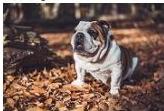
2. Animal Welfare Concerns Characteristics selected for human preference can be detrimental to the animal. For instance, bulldogs have been bred for flat faces, which causes significant breathing difficulties due to their set-back noses.
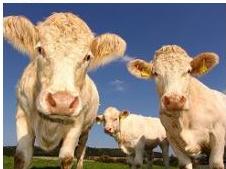
3. Reduced Adaptability Populations with low genetic variation are less able to adapt to environmental changes. In farming, if a new disease emerges, a genetically similar population of cattle might be entirely wiped out because none of the individuals possess a natural resistance to the pathogen.
Worked Example: Ordering the Process
Consider the following steps of selective breeding which have been mixed up. We must place them in the correct chronological order.
- A) Over time the desirable characteristic starts to increase in the population.
- B) These animals are bred together.
- C) The selected offspring animals are bred together.
- D) Animals with desirable characteristics are selected for breeding.
- E) The cycle is repeated over many generations.
- F) The animals with the most desirable characteristics are selected from the offspring.
Solution: The correct logical order is: D, B, F, C, E, A. First, you select parents (D) and breed them (B). Then you select the best offspring (F) and breed those offspring together (C). This cycle must be repeated over many generations (E) before the characteristic becomes dominant in the population (A).
Key takeaways
- Selective breeding is human-led artificial selection aimed at enhancing specific desirable traits.
- The process must be repeated over many generations to successfully fix a trait in a population.
- Inbreeding reduces genetic variation, increasing the frequency of homozygous recessive genetic disorders.
- Low genetic variation makes a population highly vulnerable to new diseases and environmental changes.
- Selective breeding differs from natural selection primarily in its driver (human choice vs environmental pressure).
When answering ESAT questions on selective breeding, always mention that it occurs over 'many generations'. Marks are often lost by implying it is a one-step process. Also, ensure you can distinguish between the 'desirable' trait for humans and the 'advantageous' trait for survival in natural selection.
Do not confuse selective breeding with genetic engineering. Selective breeding uses natural reproductive processes to concentrate existing genes, whereas genetic engineering involves the direct laboratory insertion of genes from one species into another.
Selective breeding is a form of 'evolution by human proxy'. While it demonstrates the power of selection to change a phenotype, it often creates an 'evolutionary dead end' because the resulting lack of variation prevents the population from surviving without human intervention.
Frequently asked questions
Why does selective breeding require many generations?
A single cross might produce some offspring with the desired trait, but to ensure the trait is consistently expressed and the population becomes 'true-breeding', the process of selection and breeding must be repeated to increase the frequency of the specific alleles.
What is the genetic reason for the health problems seen in purebred dogs?
Inbreeding increases the likelihood of offspring inheriting two copies of a deleterious recessive allele. In a diverse population, these alleles are usually masked by dominant healthy alleles, but in a restricted gene pool, the chance of being homozygous recessive increases.
Can selective breeding lead to the extinction of a population?
Indirectly, yes. By reducing genetic variation, the population loses the 'buffer' that allows some individuals to survive environmental shifts or epidemics. If no individuals have the genes to survive a specific threat, the entire population may perish.