Natural Selection and Evolution for the ESAT
Updated July 2026
Variation within species populations is the foundation of natural selection. This topic covers how genetic and environmental factors drive evolution, leading to changes in inherited characteristics over generations. Understanding these processes, including antibiotic resistance in bacteria, is essential for identifying patterns of survival and speciation in biological systems.
Evolution is the change in the inherited characteristics of a population over time through natural selection, occurring when variants with phenotypes best suited to their environment survive and reproduce.
Defining Species and Populations
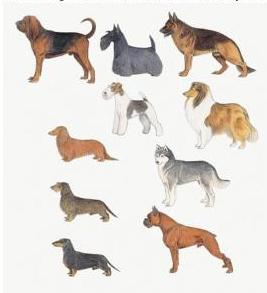
In biology, a species is defined as a group of organisms that are capable of interbreeding with one another to produce fertile offspring. A population refers to all the individuals of a single species found within a specific geographical area. Even within the same species, individuals can look very different, as seen in the variety of dog breeds.
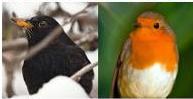
However, separate species, such as the blackbird and the robin, cannot interbreed to produce fertile offspring.
Genetic Variation within Populations
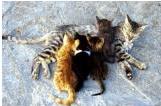
Within any population of a species, there is usually extensive genetic variation. This variation exists because of mutations, which are changes in the DNA sequence. Because most species have existed for a long time, these mutations have accumulated, leading to a wide range of different characteristics and phenotypes among individuals, such as different fur colours in mammals.
The Process of Natural Selection
Natural selection is the mechanism by which evolution occurs. The process follows a logical sequence:
- Genetic variation exists within a population due to mutations.
- Certain characteristics may give some individuals a selective advantage, meaning they are better suited to the current environment or selection pressures.
- Individuals with these advantageous phenotypes are more likely to survive and reproduce.
- If the characteristic is inherited, the alleles responsible for it are passed on to the offspring.
- Over many generations, the advantageous allele becomes more common in the population, while disadvantageous alleles become less common.
Examples of selective advantages include better camouflage to avoid predators or increased speed to catch prey.
Evolution and Speciation
Evolution is defined as a change in the inherited characteristics of a population over time through the process of natural selection. If these changes continue to accumulate over a long period, they may eventually result in the formation of a new species, a process where the differences become so significant that the new group can no longer interbreed with the original population to produce fertile offspring.
Antibiotic Resistance in Bacteria
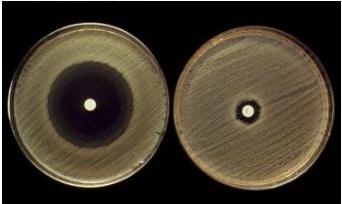
Antibiotic resistance in bacteria serves as a modern, observable example of evolution through natural selection.
Within a population of bacteria, genetic variation exists. By chance, some individual bacteria may possess a mutation that makes them resistant to a specific antibiotic. This mutation is often located in a gene on the plasmid DNA.
When a population is exposed to antibiotics, the drugs kill the majority of the bacteria but are ineffective against the resistant variants. These resistant bacteria have a clear selective advantage. They survive and reproduce via binary fission, a form of asexual reproduction. Because they pass the resistance gene to their offspring, the proportion of resistant bacteria in the population increases rapidly over generations. This has led to many antibiotics becoming less effective for treating infections.
Sources of Variation: Genetic and Environmental
Variation within a population can be categorised by its source:
- Genetic/Inherited Variation: This results from mutations in the DNA base sequence. Since these changes are in the genetic material, they are passed to subsequent generations. Genetic variation can lead to a range of phenotypes. For example, human blood groups are determined by three different alleles: , , and .
- Environmental Variation: The environment can also impact the phenotype. For instance, if identical clones of a plant are grown in different light intensities, they will show different physical characteristics despite being genetically identical.
Worked Example: Natural Selection in the Peppered Moth
The peppered moth exists in two forms: a pale form (A) and a dark form (B).
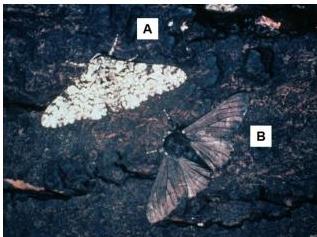
Question a: Suggest how the two forms of this moth could be shown to be the same species.
Answer: They could be bred together. If they successfully produce fertile offspring, they are confirmed to be the same species. Alternatively, their DNA could be sampled and compared for significant similarities.
Question b: Suggest why form A of the moth would survive better and become the dominant form in an unpolluted environment where the tree trunks they settle on are pale coloured.
Answer: In an unpolluted environment with pale tree trunks, form A has a phenotype that provides camouflage. Predators, such as birds, are less likely to see and eat the pale moths. Therefore, form A moths are more likely to survive, reproduce, and pass on their alleles. The dark form (B) would be more visible to predators, leading to higher predation and a decrease in their numbers over time. Through natural selection, the proportion of form A in the population increases.
Key takeaways
- Evolution is the gradual change in inherited characteristics of a population over time via natural selection.
- Natural selection requires genetic variation, which primarily arises from random mutations in DNA.
- Individuals with phenotypes best suited to their environment have a selective advantage, leading to higher survival and reproduction rates.
- Antibiotic resistance is a result of natural selection where resistant bacteria survive antibiotic exposure and multiply.
- Variation can be caused by both genetic factors (inherited) and environmental factors (not inherited).
In ESAT questions, always link the specific environmental factor (the selection pressure) to the survival of a specific phenotype. For example, if a question mentions a change in climate, identify which variant is better suited to that new climate and explain that it will be more likely to reproduce and pass on its alleles.
Be careful not to say that an individual 'evolves' to suit its environment. Evolution is a process that occurs over many generations as the frequency of alleles changes within a population. Individuals are born with their genetic makeup and do not change it in response to the environment.
Variation is described as 'extensive' because mutations have occurred throughout the long history of a species. This reservoir of genetic diversity is what allows a population to survive sudden environmental changes, as there is a higher probability that at least some individuals will possess a variant that is suited to the new conditions.
Frequently asked questions
How can you tell if two organisms belong to the same species?
Two organisms belong to the same species if they can interbreed to produce fertile offspring. This means their children must also be capable of reproducing.
Does natural selection act on individuals or populations?
While selection pressures act on individuals (determining which ones survive and which do not), evolution is described as a change in the characteristics of a population over time.
Where are the genes for antibiotic resistance usually found in bacteria?
The genes for antibiotic resistance are commonly found in the plasmid DNA of the bacterial cell.
What is the difference between a mutation and a selective advantage?
A mutation is a change in the DNA sequence that creates variation. A selective advantage is the benefit an organism gains if that mutation results in a phenotype that makes it better suited to survive in its specific environment.