Genetic and Environmental Sources of Variation for the ESAT
Updated July 2026
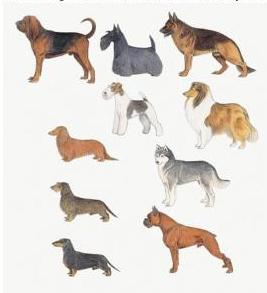
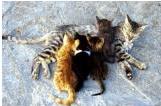
Variation refers to the differences between individuals of the same species. In the context of the ESAT, you must understand that these differences arise from genetic factors, such as mutations and inherited alleles, and environmental influences, which can significantly alter an organism's development and physical characteristics, known as the phenotype.
Variation is the divergence in characteristics between individuals in a population, caused by either genetic differences (inherited mutations and alleles) or environmental factors (external conditions), or a combination of both, resulting in a distinct range of phenotypes.
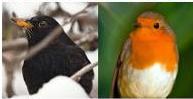
To understand the diversity within life, we must first define the groups in which variation occurs. A species is defined as a group of organisms that can interbreed with one another to produce fertile offspring. A population consists of all the individuals of a single species living within a specific area. Even within a single species, individuals are rarely identical. This variation is the foundation of natural selection and evolution.
Genetic Variation
Genetic variation refers to the differences in DNA sequences between individuals. The primary source of this variation is mutation, which is a change in the sequence of bases in DNA. Because these changes occur in the genetic material, they can be inherited and passed down through generations.
Mutations can alter the function of the protein that a gene codes for, which in turn leads to an altered characteristic. These characteristics are expressed in the phenotype, which is the physical appearance or observable traits of an organism. Because a single gene can undergo different types of mutations, a wide range of phenotypes can often be observed in a population.
One clear example of genetic variation in humans is the ABO blood group system. The different blood groups (phenotypes A, B, AB, and O) are determined by the presence of three different alleles: , , and . The combination of these alleles that an individual inherits determines their specific blood group phenotype.
Environmental Variation
Variation is not solely the result of genetics. The environment in which an organism lives can also have a profound impact on its phenotype. Environmental factors such as light intensity, temperature, nutrient availability, and physical lifestyle can cause individuals with the same or similar genotypes to look very different.
For example, if you take two clones of the same plant (which are genetically identical) and grow one in high light intensity and the other in very low light intensity, they will appear different. The plant in the light may be tall, green, and healthy, while the one in the shade may be stunted and pale. This variation is purely environmental because their DNA is identical.
Natural Selection and Evolution
Variation is the mechanism that allows for natural selection. Within a population, genetic variation means individuals will have different phenotypes. If certain characteristics make an individual better suited to their current environment, they are more likely to survive and reproduce. This is known as a selective advantage.
When these advantageous characteristics are inherited, the alleles responsible for them are passed to the next generation. Over many generations, the advantageous allele becomes more common, while disadvantageous alleles become less common. This process is called evolution, and in some cases, it can lead to the formation of a new species.
Example: Antibiotic Resistance
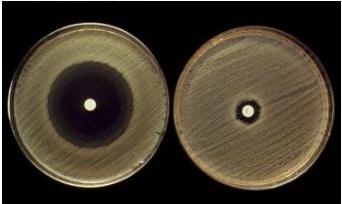
A critical example of evolution through natural selection is antibiotic resistance in bacteria. Within a population of bacteria, genetic variation exists due to random mutations. By chance, some individuals may possess a mutation, often in their plasmid DNA, that makes them resistant to a specific antibiotic.
When humans use antibiotics to treat an infection, the drug kills the majority of the bacteria. However, the resistant variants survive. These survivors have a selective advantage. They reproduce rapidly through binary fission (asexual reproduction), passing on the resistance gene. Consequently, the entire population eventually becomes resistant to that antibiotic.
Exercise 25: The Peppered Moth
The photograph below shows two forms of the same species of peppered moth, which are predated by birds.
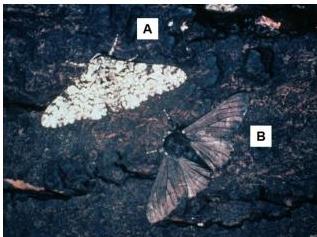
Question a: Suggest how the two forms of this moth could be shown to be the same species.
Answer: They could be bred together. If they reproduce successfully and produce fertile offspring, they are confirmed as the same species. Alternatively, their DNA could be sampled and compared to check for specific species markers.
Question b: Suggest why form A of the moth would survive better and become the dominant form in an unpolluted environment where the tree trunks they settle on are pale coloured.
Answer: The colour of the wings in form A would be similar to the pale tree trunks, providing camouflage. This makes it less likely for predators (birds) to see and eat them. Therefore, form A is more likely to survive and breed, increasing their numbers over time. Form B would be more visible and thus more likely to be eaten. Gradually, the proportion of form A in the population increases due to natural selection, as its phenotype is better suited to the environment.
Key takeaways
- Variation is the difference in phenotypes between individuals of the same species.
- Genetic variation is caused by mutations and the inheritance of different alleles, which can be passed to offspring.
- Environmental variation is caused by external factors like light or nutrients and is not inherited through DNA.
- Natural selection acts on existing variation, allowing individuals with advantageous phenotypes to survive and reproduce.
- The ABO blood group system is a classic example of genetic variation driven by multiple alleles: , , and .
In ESAT questions, always look for whether a characteristic is 'fixed' from birth (like blood group) or can change over time (like mass or height). Fixed traits are usually purely genetic, while traits that change are often influenced by the environment.
Do not confuse 'species' with 'population'. A species is a global group of organisms that can breed together, while a population is a specific group of that species in one geographic area at one time.
Variation is not just a side effect of reproduction: it is a survival strategy. High genetic variation within a population acts as a buffer against environmental change, ensuring that at least some individuals might possess the traits necessary to survive a new disease or climate shift.
Frequently asked questions
Can a phenotype be caused by both genetic and environmental factors?
Yes. Most characteristics are the result of an interaction between both. For example, a person may have the genetic potential to be tall (genotype), but if they do not receive adequate nutrition (environment) during their growth years, they may not reach that height.
Is all variation inherited?
No. Only genetic variation caused by changes in the DNA of gametes (or the cells that produce them) can be passed on to the next generation. Variation caused by the environment, such as a scar or a tan, is not passed on to offspring.
How does mutation create variation?
A mutation changes the sequence of nucleotide bases in a gene. This can change the triplet code, leading to a different sequence of amino acids in a protein. If the protein's shape or function changes, the organism's characteristic (phenotype) also changes.